Year: 2004

  • When we first visited Cambridge I was nervous about riding a bicycle. I have too many broken pieces to stand much jiggling; the fractured tailbone, the shredded arms, the phantom flashes of accidents, all conspire to keep my feet firmly on the ground.

    But I have a beautiful old Triumph, chopped and rebuilt in Portland by Erin Scarum and slowly improved by Eli and Bob to accommodate my various injuries. And this is a cycling city; it is just easier to get around using a bicycle. I started slowly, with little excursions to the grocery store, walking the bike when I got nervous.

    I had an accident the second day out – because I was overly cautious. I slowed down to let a pram pass and listed over too far, toppling over and hitting a pedestrian. He laughed and dusted me off and put me back on the bicycle. But other than that, the injuries are generally sustained by my tights, which get caught on my wicked grip pedals.

    The children complained at first. The boy said he could not, would not, not everlearn to ride his tiny vintage bicycle. But over the course of a weekend he picked up the skill and turned into a cycling fiend, weaving in and out of large crowds of tourists with nary a scratch. He asks to ride every day, several times a day, at night, at any available moment.

    One day he woke up two inches taller than the day before and we went to see Ric at the bike stall in the market square. He reckoned he could find a stylish replacement and the next day my son owned a miniature version of the bike that all the elderly academics ride.

    Old men in the park stop and exclaim I say, chap! That is quite a bicycle!

    Now we ride everywhere possible, and when the children are in school I go places they find boring. This week I’ve been all round the city, from Romsey town to the far end of the Stourbridge common. I have gone to Fen Ditton, Coton, and had tea in Grantchester.

    Riding bicycles in Cambridge is brilliant and officially one of my favorite experiences ever.

  • Several months ago, as I herded the family toward our flight to Barcelona, we stumbled across Rich Jensen arriving home from a trip to New York. We stopped and chatted for a few minutes and I told him that we were moving to England later in the year.

    Even though I neglected to tell almost everyone about the move, Rich remembered and tracked me down to send along the newest Clear Cut Press book. This one is called Core Sample: Portland Art Now and it includes a disk of “work involving moving images / parts / bodies.”

    Holding this object in my hands, I feel overwhelmed with sadness. The intangibles of Portland made up the value. I do not miss the grubby flat boring city but I feel an intense longing for the place. The factors that allow the art scene and underground communities in Portland to flourish were in some sense the same reasons I had to leave. But that doesn’t make me miss it any less.

    When I left Portland I really did not care. I was happy to have enough room to think and work, separate from the demands of my friends. I wanted to move on, I wanted to be back with the mountains and water of my youth.

    Now I want to be in England.

    This nostalgia for what I left behind is a puzzle. I suppose it is like an optical illusion, a refraction of experience. Now I remember only the parts of that life that are worth missing.

    But whenever I go to the market and pick out apples I feel a wrench. I do not want to buy food from strangers. If I go to the store I want Meadow or Patrice be on the other side of the counter. I want to see Erin Yanke in the aisles of the co-op. I want to go back to Lynn’s house and our vegetable buying club, and that guy who brought scales on his bicycle, and thirty pound boxes of apples and flats of strawberries and endless delicious vegetables divvied up from the back of an ancient Volvo station wagon.

  • I’ve been moaning about the fact that I cannot cook for countless years.

    People have attempted to teach me — Polly and Moe both made good progress and showed me essential skills like how to chop garlic. 

    I picked up occasional tricks but until this summer managed to poke along just fine with a limited repertoire of four or five simple things. The rest of the time we ate out. Given the fact that we did not know how to prepare food, it was less stressful to pay $2.85 for a bowl of pho. Or $2.50 for a burrito. Or $1.50 for a tofu sandwich with pickled vegetables and fresh cilantro.

    England has a terrible reputation when it comes to food. While I reserved judgment at first, I can now say with some certainty that the stereotype is true. Most restaurant food is mediocre at best, and it is all terribly expensive. The good restaurants are exorbitant – or in London. I’ve had what people swear is the best of this-or-that variety of food and it just doesn’t rate.

    But the cost of food in general is actually quite low, even after I mentally calculate the exchange rate, and all stores have an abundance of organic options. I can buy high quality non-GMO food for a fraction of what I used to spend in Seattle, and I don’t have to drive for an hour to find it. Just one example: a half pound of fresh organic butter costs 90p at the local grocer. The same item would have been $4.00 (or more) in Seattle, if I could get it at all without a vast commitment of time.

    However, though staples are cheap, many items I relied on back home are not available. How can a person survive without a daily dose of fresh salsa? I don’t need the corn chips – forget the tortillas – I just want the sauce! So, inevitably, it happened.

    I have started to cook. Pico de gallo was the first and most essential thing to learn. Then an assortment of rice and veggie dishes. Then salmon, and chicken, and eventually a soup involving carrots and coriander. I can make apple crumble, and cookies, and chopped up a chocolate bar for chips when the stores did not have what I needed.

    I bought a basil plant for the window sill.

    Several years ago Stella gave me The Joy of Cooking and I have mostly read it for enjoyment. Now I am using it like a map to sort out what to learn next.

  • I’ve been a parent since 1990.

    In all that time I have never once left my children with a babysitter — at least not the random teenage stranger version. There have been occasions when the children have been watched by trusted and vetted friends for a few hours at a time, but my inclination has been to keep them with me.

    If I’m not with them, Byron takes over. This was necessary to protect them from danger but also because the children are not exactly average in their needs or behavior. When I decided to have kids my fundamental belief was that they were my own responsibility, and that I would make a good life for them.

    When they started nursery school I was very careful to select programs that would work with their individual eccentricities, even if that meant an extraordinary commitment of travel time. They were always enrolled in special programs, alternative schools with substantial commitment to specific philosophical ideas.

    Beyond that, I’ve never forced my children to go to school; if they were unhappy I moved on to the next solution. Mostly this meant letting them stay home.

    Why? Because I know that I will not live forever and need to do well with the time left. Because children are only small for a little while. Because my kids are the most interesting people I have ever met. Because it is fun to hang out with my family.

    But mostly because I did not have societal permission to produce children. I was young, and poor, and sick. Things that people in other situations take for granted were never part of my daily existence. It was a political act to have children – and I had to be good, the best. It was necessary to excel at every aspect of parenting. There was no acceptable alternative.

    So here we are on the other side of the world, proper adults with careers. These children I have nurtured for half a lifetime are sturdy, healthy, loquacious.

    Moving here was a choice, and accepting the differences in the educational system is part of living in a new country.

    Today I sent them to school. Regular, normal, state-funded British schools, with religious education and PE kits and a dress code and conduct rules.

    I find this shocking.

    The children do not appear to mind.

  • Somewhere in the years of our late adolescence, when I still knew the people I grew up with, I gave a friend a ride from his parents house to the ferry terminal.

    I was a mixed up kid, still living at home even though I was already a mother. My friend was the music snob of our teen social scene and he was living what had always seemed like the unattainable dream, with an apartment across the water in the city.

    When the car started he flinched and said You like Tom Waits? in a surprised voice, then added Of course, this is the album true fans hate.

    His opinion was that the album was maudlin, sentimental, and thus annoying. It should not be in the discography, it should have been issued under another name. The tape didn’t belong to me, so I just laughed and turned up the volume to listen to Martha.

    I like songs that tell a story. I like songs that use cheap narrative tricks to solicit an emotional response. Maybe because nothing else can, I like songs that make me cry.

    This morning I opened the files and started to work on the next book. I am still puzzled by the audience reaction to some of the stories; it honestly did not occur to me that the tales were sad as I lived the reality.

    The thing I fear most in finishing the manuscript is losing the fun of it all, the exhilarating edge, the hilarious side of the horror. I do not want this book to be like the story songs that make me cry.

    I do not want to allow any reader — not even one — to come away from the book feeling inspired in the way they would be after listening to a John Denver album.

  • I had a clear and compelling fantasy of working in a luscious back garden, seated at a table with a pot of tea and a fat manuscript. And while it is true that the garden is lovely, the roses newly bloomed, the working reality is that I cannot sit outside during a thunder storm.

    Retreating indoors is not tempting, given the fact that my house is waist-deep in stacks of books and I have to edge past towers of boxes to get to the computer. Oh, and musn’t forget the small detail of bored children.

    Once again I am editing a book on the fly, scurrying from cafe to bookstore to pub, buying work time with 50p rounds of video games and promises of ice cream cones and fill-in-the-blank-whatever if they will just help and be patient, just for a few more minutes, please.

    But I did it – without the benefit of childcare, relatives, friends, television, or any of the other boons of modern civilization. I’m walking out the door right now to put the final copyedited version of Mamaphonic in the mail.

  • This is what I miss today:

    Sushi.

    Vietnamese tofu sandwiches with pickled vegetables from that shop on Jackson.

    The burrito bus down in the Rainier Valley.

    Champagne breakfasts with Stella and Al.

  • The sixteenth anniversary of the accident came and went and I have no idea what I did on that day this year; maybe we were in London, maybe we were lazing about having a picnic in a meadow next to a river.

    One thing is certain — I was not thinking about carnage on a rural highway. There is a chance that I have started to forget, though that is not terribly plausible. The better explanation is that I moved to a place where it is neither necessary nor desirable to drive.

    Instead of overcoming a paralyzing fear that limited my daily life, I simply moved to a place where I am not required to perform the task that was forever fraught with emotion.

    This is a clever trick. I should have thought of it years ago.

  • The last time I saw Marisa we talked about clothes, and the contrast between her style and mine. She has known me a long time but she has forgotten that when we met I had short black hair and dressed in work pants, tshirts, and a black tattered hoodie, the correct urban camouflage for that time and place.

    But looking right always makes me squeamish and I moved on to a phase of wearing square dancing dresses, cocktail dresses, swishy polyester, dazzling sequined antique skirts. I carried handbags to match each outfit. I grew out my hair and dyed it three colors and gave up my old round spectacles for blue flashy frames. Because nobody else in my vicinity was doing any of those things.

    I have been collecting things my entire life. Not generally on purpose, not with intent, not even always with my consent. It just happens — particularly clothes. For each incarnation of my identity I have had a compulsion to create a new wardrobe, and around the edges of this desire people give me gifts and oddities.

    In Portland I had endless access to cheap vintage clothes and a dry basement with 800 square feet of storage. By the time we moved the entire area was full of boxes and dressers and stacks of hats, piles of shoes, racks of clothing.

    During the Seattle years I was in a state of mourning. I was distraught over broken bones and betrayal, the deliberate cessation of certain friendships. I was trying to understand the reality of living in the landscape of my dreams.

    I wore basic black every single day and paced the floors of my sweet little house, staring at the mountains through the picture windows, and then sat down to write with ferocity. I worked and played with my kids and went swimming. Eventually I cut my hair and dyed it back to a natural state and moved from black clothes to shades of brown and blue. But I did not wear my beautiful dresses; I was not feeling frivolous.

    I gave away or sold half of my clothes when we moved to Seattle. Packing to come here I whittled the remaining allotment down by three quarters. But even after purging that volume I was left with a fabulous wardrobe, an entirely amazing set of clothes that would cost a fortune if I had to replace them. Not that I could replace them; I do not have the body type that is most valued by owners of vintage clothing stores. The outfits I’ve found over the years are in fact remarkably special.

    And now it may all be ruined. I have no idea; the laundry has not called to report.

    I have not allowed myself to be upset – yet – but uncertainty is not a favored emotion. I do not want to be compensated for the loss of my wardrobe.

    I want my clothes.

  • The most precious of my possessions arrived whole and well. The dental plate collection, false eye, glass slippers, antique ashtrays – everything in my scientific cabinet and the cabinet itself arrived without any damage. I’ve hung the paintings and photographs, sorted the zines, opened all the boxes to cull the best bits.

    Even though this was the second big move in less than two years I still have random things that nobody should keep in their lives; old receipts (for example a faded record of grocery purchases in Olympia circa 1990), books I never plan to read, all the letters I have ever received and many of the tens of thousands I have sent.

    Down at the bottom of a big box I found the songbooks. Now if the mood strikes I can look up the words to all the songs I used to know, though paging through these small handmade books makes me feel sad.

    I put together the pamphlet we distributed at the Mudwrestling Hoedown, and it took hours of library research to find the perfect images of square dance instructions and wrestling guides, then an unknown number of additional hours to laboriously cut and paste the assemblage.

    That particular event was a fundraiser but it was mostly just an excuse for lots of people to wear crazy outfits and roll around in the mud. There was a kissing booth and I was a popcorn girl.

    Who won the wrestling competition? I cannot recall.

    Later that summer, during my Travelers Party, this kid showed up in the middle of the night and sat on the porch with assorted people including James and Per. We traded macabre childhood stories and toward dawn he said that the place was a punk retirement community, the place people go when they can no longer deal with real cities.

    These are the maudlin thoughts of a rainy afternoon in England:

    I miss my friends, miss singing. But that place was not my home and I do not think I will ever find one. I doubt that such a thing exists. It will have to be enough that I have so many dear friends all over the world, that I have this eccentric small family, that I can keep moving on.

  • Because of the extreme chaos of the last few weeks, and limited internet access, I missed the deadline to turn in the catalog description of my new book.

    This is disconcerting because several of my friends offered up excellent ideas of how to describe the thing — it is not actually a cancer memoir but rather a book about danger and safety.

    The content and perspective is difficult to convey in a succinct way that works in catalog format. I am not in fact capable of describing it in conversation, let alone writing a precis.

    When I downloaded all my email there were hundreds if not thousands of urgent tasks that went untended and this message from AEM:

    Dude! Get on the ball. I had to stop in and write your book blurb for the catalog on the way through Chicago. I described it as “pure fluff,” “head candy” and “rib-tickling!!!” Hope you don’t mind.

    I haven’t laughed so much all month. But the funniest thing is that she actually does agree with me that the stories are hilarious.

    Which is why I love her.

  • On Tuesday we popped down to London to do the touristy things we will never get around to once we have acclimated to living here. The idea was to take advantage of a brief rest before our household goods arrived, because unpacking is so chaotic and stressful. We saw the changing of the guard (or at least the start before we grew bored and wandered off), took in the view from the top of Westminster Cathedral, toured the Cutty Sark, and when the skies started to spark with lightning took a boat tour of the Thames.

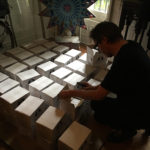
    The next day the movers showed up with the 20 foot box we packed in early June in Seattle. It was still sealed shut, and when they cracked the bolts and opened doors water poured out of the container. 

    We all jumped back. Then we realized it wasn’t just water – the liquid running out was oily and dark. The movers described the smell as putrid, wretched. It smelled of the sea, and fish, and oil, and putrefaction.

    As the day progressed they said they had never seen a shipment damaged to this degree.

    Everything packed in the bottom of the container was wrecked.

    The soft goods are permeated with a ghastly smell. Every single item of clothing, all the bedding, all plush toys, and most of the books have been ruined.

    Also wrecked in the process, mostly by negligence on the part of the shippers, were sundries such as four bicycles. My hypoallergenic and very expensive mattress. The kids bed frames. Too many other things to list.

    I am not fazed nor even particularly upset (I’ll save that for later). I just have a lot of work to do. I’ve spent the better part of three days and nights systematically surveying all the damage, making lists, throwing away the debris.

    The insurance has already kicked in, a handyman is coming to fix our furniture and bikes, and I’m going to try and find a new mattress today (this will be challenging as bed sizes are different here). We have decamped to a hotel in the meanwhile.

    I do apologize to everyone waiting to hear from me about manuscripts and book tours. Life has intervened and I will not be able to check email for a little while.