


Year: 2005

  • Byron went to Estonia for a conference, and we tagged along because Tallinn sounded interesting. Byron was away all day and most evenings with his colleagues, and the rest of us huddled in a hotel room avoiding the rain. The children watched Nickolodeon shows dubbed into Russian, I walked around fetching groceries, and we read a lot of books.

    One evening I caught up with Byron in the market square, and met an Italian man who lives in Iowa City.

    Cesare was surprised – he said me that he heard me speaking on NPR without knowing that I was married to one of his friends.

    The observation that our world is excessively small still holds, even so far from home.

    Tallinn is in fact beautiful – splendid even – with an old town center that has not been developed into a boring homogenous shopping mall. I took a great deal of pleasure in my walk up and down Toompea and through All-Linn in search of comestibles.

    We went to the oldest functioning pharmacy in Europe, and a marzipan museum, where we bought a kitty to take pride of place on the girl’s birthday cake. But because I couldn’t find a cake she wasn’t allergic to, the kitty was destined to go home with us and make an appearance on an organic cake – and because she was gracious about the whole thing I knew that I would end up throwing not one but three parties. My daughter is now fifteen years old.

    This is perplexing, but nonetheless true. She likes us, which is an honor.

    Her birthday also marks the mysterious moment when Byron and I decided that we didn’t in fact hate each other, and despite (or because) of the scandal it caused, we’ve been together since that day twelve years ago.

    When he was finished with his conference and work dinners we left the kids at the hotel and walked around the old city pretending that we were on dates. I’ve never been on real dates, and I’m not sure that he has either; but we persevered.

    Byron took one day off and we rode the high-speed ferry over to Helsinki to visit his friend Vappu, a girl who attended the same alternative high school as an exchange student. She showed us around the market, and her apartment, and it was eerie to be in a place where people wandering the streets look just like my relatives.

    I didn’t see myself reflected in the population, but I did see dead ringers for all of my aunts and half of my cousins. My charismatic elder child exerted her charm on our hosts, the boy fell asleep on a tram, and we bought paper doll books before waving goodbye. The border guard on the Finnish side attempted to banter with me, which was less painful than normal because we were both equally awkward and slow in our quips.
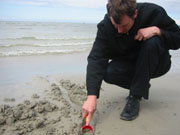
    On the last day we went back to the beach and the boys built sandcastles with ferocious intensity. I went wading in the Baltic in the shadow of an abandoned Soviet watchtower, clutching my skirts as high as possible. Then my daughter and I sat hunched against the wind, watching the engineers of the family exerting serious effort to build a canal.
  • Our Seattle house was situated above these steps; the people in the picture are my old neighbors:

    Crack Staircase.

    Gee, I loved that house. Especially coming from a neighborhood in Portland where, when we moved in, it was normal to see corpses on the corner. Or have a high speed chase end in your yard. Or spend major holidays sitting in the stairwell, waiting for the celebratory gun volleys to halt.

    Everything is relative; I thought we got off lightly in Seattle when we were robbed – and the thief only took a birthday cake and a bottle of wine.

  • Over the weekend the older child begged for a trip to London; she desperately needed to see the Mr. Clement show before it closed. I was opposed in theory not only because of the bombings, but because I do not wish to see undercover police officers shoot innocent people in the head. But since I walk through life anticipating imminent destruction I rarely let these things dictate my actions.

    It seemed statistically improbable that we would get blown up.

    The first thing we saw upon entering King’s Cross was a poster for the film Me and You and Everyone We Know. My daughter stopped, pointed, and exclaimed Hey! I was in one of her movies!

    I nodded and nudged her to move because she was blocking pedestrian traffic. But the poster appeared around every corner, in every tube station, throughout the day. Byron didn’t notice because he was lost in his own internal world of maths but the small boy, who appeared in The Swan Tool, counted dozens of posters throughout the day.

    The children were nicely distracted by the posters, and the macabre toys they purchased at the store featuring the Mr. Clement show. They did not even notice that we were evacuated from Liverpool Street Station.

  • Oh, glorious day – Cambridge has a new independent movie store! Mr. Stacey’s Most Excellent Video Emporium is located on Mill Road, which to me may as well be on the other side of the planet, but it is there! I visited, I browsed, I borrowed. I am pleased.

    Today I watched Y Tu Mama Tambien. Byron asked me what I thought of the film and my first response was to say I’m glad I have never known boys like that.

    I do not enjoy scatological humor, or any of the other characteristics of normal teenage boys. But seconds later, I realized that I was mistaken. Because in my teens I dated someone who looked and acted like the Gael Garcia Bernal character; in fact, my duplicitous boyfriend was prettier, wilder, more intense – not least because we both survived those years. He was also more damaged than the character on the screen, and that is the point where I say goodbye and forget. I will never talk to him again, but I do appreciate what we learned in those years.

    The film itself? It was a nice thing to watch on a rainy afternoon after a week of dealing with sick family members. I haven’t decided if the main message is the idea that one is only truly liberated when death is imminent, or if the film conveys the concept that the punishment for freedom is death. Either way – we all die, so it doesn’t really matter.

    I also find it extremely fascinating and cool that Alfonso Cuaron directed the best yet Harry Potter movie.

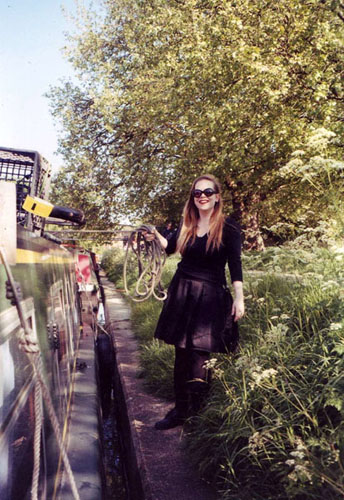
  • During my first visit to England I sat on the banks of the river next to the Fort St. George, staring at the narrowboats, and announced that I wanted one. After we moved here I went to the Boat Open Day and decided that the idea was feasible; within a few weeks I had purchased one, and it has been a singular joy. When I have to travel for work I dream about my boat. Everywhere I go, I wonder could I moor my boat here?

    The idea of letting strangers walk through the boat was too difficult (for many reasons) so I went to the latest Open Day as an observer once again. But we bought Camboaters shirts and sat idly on the decks of other boats, talking about mooring policies and eating biscuits.

    One of my new boat friends said So you are a writer?

    I nodded.

    He asked What do you write?

    I replied (as is my custom – or bad habit) Books. 

    Everyone laughed — which is why I like the people who live on boats. Other sorts of people are confused or offended by my natural reticence.

    When Stevie visited she consistently tried to help me with the small tasks I could not perform when we lived in the same town, and for the first time in my life I could say Don’t worry, I’m strong. 

    I could not reliably turn a doorknob or hold a paintbrush three years ago, but now my wrecked arm is sturdy enough to hold a steel-hulled canal boat against the shore.

    Jen K. mailed photographs after her latest visit and when the children opened the envelope they said That is what you really look like, mom.

  • The August 1 issue of The New Yorker has a review of the Michael Winterbottom film 9 Songs containing this quote:

    There is a fine film to be made about the retreat from worldly obligation into erotic rite, and Brando and Bertolucci made it in 1972. But what ‘Last Tango in Paris’ proved was that our skin-grazing view of a body makes us more, not less, enthusiastic to grasp the shape of the soul that it enshrines. Sex, in other words, is a surprising revelation of character, and when the characters in question, like those in ‘9 Songs,’ are drab to the point of inane, their lovemaking becomes as heated and gripping as blancmange.

    Now, setting aside the fact that this is hilarious (and I had to look up the recipe for blancmange), I doubt very much that the director of the film was trying to make any large statements about the nature of the human soul. I hadn’t read anything about the movie when I saw it, and while it was surprising in many ways, my primary response was disbelief that it passed the censors uncut with an 18 certificate.

    This movie, friends, is the first mainstream manifestation of the tenets of what might be described as alternative-feminist porn. My eyebrows were raised less by what happened on-screen (multiple scenes of real explicit consensual sex and a female lead allowed to enjoy herself without negative narrative consequences) than by the fact that anyone can rent the movie from the indie shelf of their local videostore.

    Whereas one of the main criticisms of the film in other publications is that it is not porn, because the action is kind of boring. Which makes me wonder: have these writers watched any porn lately? I think not.

    Maybe there was some kind of artistic statement underlying the whole scheme (Winterbottom originally wanted to make a film of the Houellebecq novel Platform which might be interpreted to contain philosophy of … some kind). But in practice, the movie basically shows an extremely normal no-hope relationship based around physical contact and rock shows.

    One hopes that this is how many people conduct their lives in their teens and twenties. One knows that the average mid-30’s scientist is more likely to be worried about marriage and mortgages (though I can attest that the British Antarctic survey folks tend to be marginally hotter than other flavors of scientist – they’re the extreme sports-people of the research community). But fundamentally, there is no plot and no attempt to make a grand statement. Except, perhaps, for the whole thing about screening real sex at Cannes.

    The seriously depressing thing about this movie followed the UK release. The established (former child star) mid-30’s male actor, Kieran O’Brien, rightfully proclaimed It wasn’t difficult for me to make and I’m really proud of it…. I was quite prepared to talk to anybody anywhere about how proud I was to work on the film and how good it was… I was always the opposite of ashamed.

    The young female actor, Margot Stilley, said It isn’t shocking… If you know you are going to watch a film like this, it’s not abrasive. It’s normal sex that everyone has, not crazy stuff.

    Of course, it was Margot Stilley who was pursued by tabloids, watched her family being harassed by the press, and eventually asked that her name be withdrawn from the promotion of the film.

    Now that the movie is being screened in the states I presume that there will be even more backlash. C’mon, people. Double standards are so tacky.

  • Gabriel confirmed that Maria Fabulosa offered the cowboy hat as a bribe so he would stay on the Breeder tour; but he also reminded me that I sweetened the deal by giving him the best sweater I have ever owned. Four years later he still wears the thing, so I asked him to describe it:

    Bee,

    The skanky sweater is a cardigan, a little short in the waist and sleeve, pale brown and a wee bit stripy, fairly fuzzy and somewhat itchy. It does have a few holes and occasionally smells a bit off. It is of a three material blend that no one can identify. Against all expectation, it may be the sexiest piece of clothing I’ve ever owned.

    I guess it was the combination of sweater and hat that inspired the old man in the Castro to call me a freak when I walked past. To my knowledge this is the only time a stranger has audibly referred to me as a freak.

    Love,
    Gabriel

    We all pitched in to feed and entertain the roadies, but later I contrived to provide Gabriel with an official wage. After we got home I tracked down and purchased more than two hundred of the small books he converts to tiles.

    One of those became the cover art for Lessons in Taxidermy.

  • I woke up to what Byron calls perfect weather: another grey, overcast English day. I met Byron in the market for tea and then we sat on the wall in front of King’s, listening to the bells of Great St. Mary’s and watching hoards of tourists stream past Senate House.

    We talked idly about what I should do as my “public risk” for the reading in November and he suggested I take volunteers from the audience to kiss (because I’ve slept with more people than I’ve kissed and symmetry is important to my obsessive mind). But that would involve fixing my lipstick in the middle of an event. Which would be annoying. I’ll have to come up with a better scheme.

    Byron left for work and I wandered through the market, buying chorizo and olive oil from a man who is shutting down his stall and going home to Malaga. I stopped at the bread cart for a loaf of calamata, then at the olive stall for tapenade and pesto; the olive lady helpfully informed me that she will not be around next weekend so I bought extra.

    Today was the first day I’ve made it to market while the organic vegetable people are still stocked up; it was thrilling to pick through bins of lettuce and cucumbers and kale before handing my coins over.

  • The whole family is mad for KTS: he is and always has been more scathing, hilarious, and decent than almost anyone I know. Of course he denies the claim (the first time we spoke after years of silence he apologized for being such a jerk) but he is a truly good person. The proof of this is the fact that my children adore him and refuse to share his company. We parents were dispatched on errands so the younger set could have the guest all to themselves.

    Our friendship started in an odd way, on the periphery of a youth leadership program run along the lines of a cult (though I may be biased in this view). It was random chance that put us in the same — er — cohort group, and we probably would not have talked then if not for the fact that our leader lost one of the kids; everyone fanned out to find her but KTS and I sat on a boulder, reckoning she was already dead.

    The people in charge of the summer institute kept us awake most of the time, cut off much of our contact with outside friends and family, exposed us to books and films designed to breach our pre-existing world views, sent us to watch war games on a military base, marched us to the gay pride rally, put us through media training, and generally did whatever they could to incite our nascent political consciousness, in whichever direction would prove most unsettling.

    We were challenged (some would say coerced) to do whatever was absolutely impossible; my fear of public speaking was forever extinguished by the fact that my graduation speech ended up on the evening news.

    The institute was brilliant, and dreadful.

    Two days after I went home, KTS came over to watch movies with some of my friends; I don’t think I have ever asked him if he knew that my boyfriend and best friend were hiding in the next room kissing while we innocently sat on the couch watching a bad gothic film about Lord Byron.

    The boyfriend was a burden I had been trying to shed, so I wasn’t terribly upset, although the guest list for the next day was changed to exclude the best friend (for her appalling manners; she could have had the boyfriend if she had asked nicely). In the end I was also too harassed to pick up KTS, and only four of us ended up in the car on the day of the accident.

    KTS turned up at the hospital and sat next to my bed in intensive care for an entire day, listening to me talk fast through a fractured face. He did not wince; he did not display anything except sarcastic wit. It was exactly what I needed.

    That crazy year played out in various sinister and horrible ways. Some people might have found refuge in music, art, or religion. I found a different One True Way: I distracted myself by starting a nonprofit.

    I may not have been sane, but that didn’t stop me from working endlessly to create the Youth Initiative, to travel around the state and meet kids in every high school, to do a hundred or a thousand sundry tasks at the service of an abstract goal. It was easier than staying home. My friends from the institute didn’t understand about the accident; nobody knew about the cancer. The work let me be a different person, and that person survived.

    KTS shows up in this narrative as the amenable albeit exasperated boy who was embroiled in my plans. I presume he was bored; there isn’t really much to do where we grew up. But regardless, it is baffling now to think of everything he did at my bidding: show up for countless committee meetings, help set up and run symposiums, speak at the breakfast meetings of fraternal organizations. I mean, really; I even made him join the Sea Scouts (so we could get access to a warehouse on the waterfront). I have no idea why he went along with my schemes. He doesn’t even remember doing it.

    There were one hundred people at the summer institute, and four of us went on to attend the same college. We didn’t have much to do with each other; we were all trying to establish adult identities. The strangest thing about my story happens at this juncture — because Byron met KTS before he met me, at that small red hipster house (it had a name that I cannot recall) that was later torn down.

    Byron was hanging out and KTS showed up with a mix tape. Memorable? Not really, but for some reason the incident lodged in various brains. Next Byron met and developed a crush on Buffy (who could resist? Nobody I knew), the genius mathematician girl James dated during and after the institute. The first time I glimpsed Byron I was trying to convince her to eat, while he was laying across her bed playing chess. Then Byron moved into a house where James was already resident, without connecting any of the other three people. Then I showed up.

    I didn’t put together any of the connections until this weekend, as Byron and KTS were stretched out underneath the dining room table chatting, when it struck me as statistically improbable.

    It was a small town but not that small; I have scores of friends now who were there at the same time and we never encountered each other back in the day. Byron did not meet my other friends from high school, or my stalker, or my best friend, or the boy I would marry that year. Our lives intersected only with fellows of the institute (who mostly were not talking to each other).

    Seventeen years later, KTS is a reformed DJ and determined medievalist. We walked around this old city and he told me more than I had ever hoped to know about the place. I’m so pleased that he is my friend.

  • My experiment in pure hedonism was bound to fail. When not occupied by work or family I am capable of wandering around in a haze of sensation. But that only takes up a portion of the day; at some point the fugue state lifts and it is inevitable: I start to think about something abstract. This week it was the politics of pleasure.

    Stevie has a peculiar ability to ask questions that solicit secrets, and KTS shares memories of things best forgotten (he even, unlike me, remembers the names of the principal characters).

    I’ve always done exactly what I liked, but I am intrinsically ethical and conscientious; I believe that life should be fair and fun. 

    In fact, I could never enjoy one without the other. I wish that more people felt the same.

    Stevie and I walked all over Cambridge singing chorus songs. Between us we should have known at least a dozen, if not more, but the memories have faded. It was startling to observe how much can be forgotten; we practiced together every week for years but can’t get through an entire song without stumbling.

    I asked Did you know that I cried when I left?

    She replied No. 

    Of course this means that she probably does not know how hard it was to leave.

    That final weekend I went to the coast for Writer’s on the Edge. The event was in a theater and after I read three passages from the Lessons in Taxidermy manuscript Marisa did a set. Later we went out to a bar with our friends and a crew of local artists and musicians. Someone offered me drugs, for the first time in my life, and I was so surprised I was probably too sharp in the way I refused.

    We walked along the beach with a bright moon illuminating the dunes and ocean, sat on driftwood and watched Anna Ruby and Stevie dancing in the moonlight. As the others talked quietly I put my head down and cried silently, tears dropping on the sand.

    Marisa and Jody were sharing our room and everyone laughed before falling asleep; I turned my head on the pillow and cried quietly.

    There were mad escapades on the beach in the morning and when Stevie and AR embraced me for the final time I started to cry, tears slipping down the side of my face, obscured by snarls of hair. As we pulled out of the parking lot our friends flashed us, and then we were on the road.

    Byron and Marisa tactfully ignored my tears. I gripped the armrest and cried and cried for hours. It was all I could do not to break into wrenching sobs.

    Eventually the tears stopped; we found a roadside burrito stand and watched in baffled amazement as a girl at the next table vomited and her friends just kept eating their lunch. We got back on the road and talked and laughed for the rest of the ride.

    I knew that I would see everyone again, and that the ocean would always be there.

    Stevie is remarkable for many reasons, but singular amongst my friends in that she once forced me to admit that I love her. I don’t throw that word around easily, no matter how strong the feeling; there are people I care about equally who have never heard me profess any emotion whatsoever.

    Now she has gone home again. I’ll miss her.

  • In other news, the film festival has a series of Studio Ghibli features, and last night we went to see Whisper of the Heart.

    This film would have my eternal allegiance just for the use of Take Me Home, Country Roads as a central plot element. But the depiction of love based on career competition was extraordinary.

    The idea that relationships can not only survive separation but thrive on the challenge was more true (for me at least) than any movie I’ve seen in recent memory. The movie suggests that knowing people with huge transgressive aspirations will force you to want more, do more, achieve more, feel more.

    Seems pretty accurate to me.

  • Many of our conversations over the weekend centered on figuring out how we feel about living in a small calm university town. Before we arrived various people were worried; they tried to warn us that we would not be able to maintain our hectic lives in this setting. More than one told us we were insane to come here.

    We rode our bikes along the tow path, past the Baits Bite Lock, talking about how our lives have changed. While it is true that there isn’t much going on in town, this means that we have lavish amounts of time to do our work. When we aren’t working we ride bicycles, wander through cemeteries, eat picnics in parks, and drift along on the river.

    Our daily life is in all respects more satisfying than the way we lived in the states; our careers are exponentially more interesting and rewarding; our children are flourishing; we have lots of new friends. We can go home whenever we like, and many of our old friends visit us here. I have created a new and independent space for myself on the boat.

    I do feel somewhat nostalgic for what we left behind. I could call the feeling homesickness, but that word doesn’t have much resonance right now. I’ve never really belonged anywhere, and claim no affiliation with any community. I have made enormous emotional investments in friendships with people who are never around, and this arrangement suits me. The truth is that I’ve always felt almost exactly how I feel now; the difference is that my rootless ways were never visible to others.

    I’ve been sad and even despondent at various points in the process. I have even, secretly, cried. But I know that I’m lucky. I also know that the amazing crazy fun times in the past had nothing to do with geography. Those other cities were not more fun than this one; I just threw more parties back then.

    Yesterday I opened the cupboards that store the remnants of my wardrobe. I gave away hundreds of dresses before we moved, and dozens were ruined in transit, but there are a few left. I haven’t worn them in years but I picked through, pulling out the best ones, remembering the trips and performances. At the very bottom of the cupboard I found my favorite dress, a blue wraparound so well-worn the unraveling seams can no longer be repaired.

    I wore the dress during my first trip to Paris with Byron, when a sudden gust of wind undressed me in a park, much to the delight of passerby. Later we had a fabulous dinner and were befriended by an elderly man and his companion, who declared that she was a whore.

    I wore it on the Breeder tour; there is a picture of me with Gabriel, laughing so hard I couldn’t breathe. I wore it when I covered the door at various events, stuffing cash in my cleavage for lack of pockets.

    I wore it to the formal wedding of a good friend, and took Stevie Ann as my date; it didn’t occur to me that I would scandalize anyone with an outfit cut so low my red undergarments were on full display.

    When Gabriel and I ran away to Italy for a month I took the dress along, though I was not wearing it the day we stared down at the swans on the Arno and I declared that it wasnecessary to move to Europe.

    I pulled the dress out and put it on, then we cycled out to Grantchester for a fabulous garden party.

    One year ago today we moved to England.

    This new life is brilliant.

    Happy Independence Day.