Year: 2006

  • I have always been obsessed with luggage. Years before I felt a stab of lust over the suitcase in Desperately Seeking Susan I started collecting bags of all sorts. Back then the best vintage stuff was cheap – the thirty or so Enid Collings purses I own cost perhaps a dollar each, often far less. I have dozens of clutches made of gold lame, or black vinyl, or leather of all shades. I have beaded bags, and bags made to look like jeans, and an original Carpet Bag, tag still attached.

    Even though I did not travel further away than my best friend Anne’s house down the road, I purchased all manner of suitcase and valise, the odder the better. These moved with me to college, around Olympia, to Shelton, Portland, Seattle, and even to England.

    Those that were not ruined by the flooding en route are mostly in storage but some have functional purposes, holding similarly hoarded antique stationary and postcards, cracked yet precious cassette tapes, family photographs.

    For years I used old airline bags to haul my stuff around every day; my favorites were from Pan Am and Japan Airlines. When they became popular with the ironic hipster set I put all of mine in a cupboard, muttering imprecations against fashion trends.

    I used to travel with other bits from the collection – the vintage white leather makeup case with tassels accompanied me on a few tours with Ariel. The round locking suitcase went to Denver and Los Angeles. The matching red set of Sears-brand (and very sturdy) suitcases made several cross-country trips.

    Age and infirmity (or rather, typing injuries and a broken tailbone) forced me to succumb to modern conveniences like ergonomically designed suitcases with wheels. This was of course sad, but locating the perfect suitcase proved to be a fine new obsession.

    It took a few years of experimentation to find a bag that had everything I needed: small and lightweight enough to minimize hassle crossing London or NYC, the right size to take on board a plane, sturdy enough to check if necessary, and sufficiently flexible that it could be used for all sorts of trips.

    While I agree with other travel writers about packing light, I have extenuating circumstances, like the need to attend dinner parties or perform for audiences. I am willing to wear crumpled clothing, but I do actually have to dress up.

    It is impossible to shop in Cambridge so I set off on the Lessons in Taxidermy tour with all of my possessions in plastic grocery bags, hoping that somewhere along the way I would figure out a solution. In the middle of the trip, while resting in San Diego, I perfected my system.

    The suitcase I selected measures ten inches by thirteen. In it I can pack everything I need: a dress, three black tshirts, four pairs of tights, jammies for when I do not have a private place to sleep, an umbrella, an electric toothbrush, medication, spare lipstick, packaged hand warmers, a scarf and three pair of gloves, three books and a half dozen magazines.

    Half of the interior space is taken up by toiletries – sunblock, moisturizer, potions and creams that are also sunblock. The only soap I am not allergic to, nail clippers, assorted prophylactic and first aid solutions in case of emergency (you would not believe how often friends and even strangers inquire if they can “borrow” a Band-aid). When fully packed, the bag still has room for the additional detritus I collect; mostly that takes the form of stocking up on sunblock I cannot buy in Cambridge.

    The runoff and the laptop go in an ugly briefcase that slips over the handle of the first case, saving my neck and back the pain of carrying it around the airport for hours. If circumstances (like, say, haggling a dealer down on the price of antique Russian marionettes that my son obviously had to have for Christmas) forced me to carry extra things home, I could buy a duffel to check as my only allowed piece of luggage. Each time I set off on a new trip I felt smugly satisfied that I had developed such a smart and compact approach to travel.

    As I have discovered in the past, it is never wise to be smug. The new security restrictions came along and destroyed my system.

    Checking the bag with the toiletries takes away my wheeled system and leaves my sensitive spinal column at risk. Even though BA changed the allowance to two checked bags, my poor twitchy brain cannot cope with the possibility of additional rule switches.

    Obviously, I need a new bag to check, so I can use the carry-on as a briefcase and retain the duffel option. And since I spent an exhaustive week or so stalking luggage sites I figured I might as well try to find a not ugly briefcase for daily use.

    The most significant complication in this scheme is the fact that there are no stores in Cambridge that sell my preferred suitcase, and I am not willing to pay what they charge in London. Instead, I ordered a suitcase to be delivered to my parent’s house, saving myself a huge amount of money.

    This means that I am once again setting off on a long trip with all of my possessions in plastic bags; though this time I reckon I will use one from Selfridges rather than Sainsburys.

  • We baked a cake, prepared a feast, and settled to unwrap his presents…. and just at that moment the boy was felled by a stomach virus that put him to bed with a bowl at his side for the next few days. As he recovered the bug took me down; we were both still too ill to travel as we boarded a plane to Italy.

    The children, inspired by The Thief Lord and A Little Romance, have long clamored to visit Venice. In fact, the request predates even the first hint that we might move to Europe. But despite this, and the fact that my trip to Italy in 2001 convinced me that I wanted to live there, it has never proved convenient to trek in that direction.

    Why? Because I literally never travel for pleasure. All of my various adventures are organized around work: if I pop up somewhere it is because one of us is performing, or lecturing, or attending conferences.

    But this half-term Byron had meetings in Venice and Trento and I decided we should all go. The boy and I were wan and nauseous but still thrilled by the vaporetto ride from the bus station. The girl, normally persecuted by tricky food allergies, was delighted to be able to eat in regular restaurants – until she too was taken out by the virus, as we boarded a train to the Italian Alps.

    We didn’t see much of Byron but we ran into the East London Massive intermittently embarking on boat rides.  Once the three of us had all recovered, we had an absolutely idyllic time. Both children bought gorgeous handmade Italian boots; the girl (as is her habit) started to learn the language by purchasing and translating comic books. They both graciously indulged my love of ferry rides, even going along on a pilgrimage to an island cemetery where we stared at the grave of Ezra Pound as I delivered a lecture on modernism, fascism, and poetry.

    I took them to watch glassblowing on Murano, telling them that two of my uncles were journeyman glassblowers before they died too young in horrible circumstances. This turned into a discussion about how, despite appearances, we are not wealthy. We are profligate. Moving to another country, traveling constantly, the careers, are symptomatic not of elite status, but rather of a cracked restlessness.

    One of my fundamental worries as a parent is that my children are too sheltered, that they do not know how hard it is for most people to get through the day. While I cannot give them the lessons I learned as a working class kid, I can at least attempt to inoculate them against the prejudices of the upper classes.

    My brief rant on the subject came to a halt when we rounded a corner to hear a posh British woman say My friend has one of these chandeliers at her castle in Scotland. We all agree that it is simply hideous!

    We had to hurry away stifling our giggles.

    We fed pigeons in San Marco, took a gondola ride (at a reduced price through extensive haggling; Byron and I are at heart used car dealers), explored the Doge’s Palace, wandered through countless churches. We ate gelatto and walked along canals and had, simply, the best trip ever.

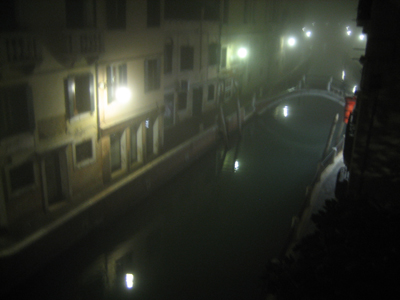
    View from the hotel room:

  • Recently my son was asked to write his memoir for school. The document starts with:

    I was born five weeks early because I was drowning in blood.

    It has been ten years since that frightful day. The baby slashed out of my body gasping for oxygen has grown into a strapping lad who will probably be taller than me before his next birthday.

    The intervening years have seen him through various schools and adventures, singing in the chorus, writing his Lego zine, moving away from his beloved home in the states, making good friends in a new country, traveling the world. His perspective is always measured and accurate; he is the most sensible person in my entire extended family.

    He is sweet, and brilliant, and eclectic, and one of my best friends.

  • I am a careless correspondent and only intermittently reliable when it comes to the standard tasks required to maintain friendships; this is most clearly evident when someone has an infant.

    In the year and a half since Amy Joy and Dishwasher Pete had a son I’ve been to visit them in Amsterdam exactly once. When I feel haunted by this fact I remind myself that I have visited friends with babies here in Cambridge about the same number of times – and they are just a five minute bike ride away.

    I know from experience that it is hard to find community when you are the parent of a small child – hence the ten year commitment to my day job running a parenting magazine – but the fact that I know this does not make it any easier to arrange visits. Even if I had small children about the place this would likely be true (and in fact, might prevent any visits at all – my infants always provided awkward challenges in these situations). Families are notoriously difficult to schedule.

    Given too many constraints I often just stop thinking about the subject. But Amy Joy is very organized and she finally managed to pin me down on a date for a visit. This weekend it was a tremendous delight to welcome their small family and show them around Cambridge. We went for walks, and lingered on playgrounds, and went punting, with our boys laughing and splashing. We talked about the past and our expat present.

    During the rush to pack before going away I neglected to write about a similar meeting with another Portland friend – Lli – in London. We first met via the magazine when our babies were not yet crawling; she was the only person who braved a winter storm to attend my birthday party that year. Our children are both extremely tall and blonde, and this was true even in their toddler years. Lli and I were friends through many major upheavals in our social and work lives, including her move to Pittsburgh and mine to Seattle. The fact that we can meet and go to a carnival in a far distant city, after nine years of camaraderie during which we see each other only rarely, is extraordinary.

    The fact that there is continuity between my old life and this one is quite surprising.

  • The other night as I walked to meet Rachel at Clare College I tripped (or perhaps fell off my flat orthopedic shoes – hard to say) and hit the worn stone floor hard. Of course, I was wearing my last unripped pair of black tights and they were shredded. This was more painful than the bloody bruised knees and hands.

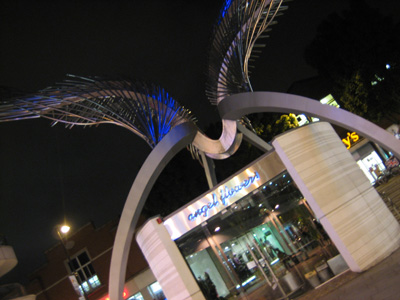
    I’ve been working furiously to offset a month of imminent travel but found time to do a bit of shopping in London, where I caught up with Iain. He took me to the New Piccadilly, where I watched the owner and his mates drink several bottles of champagne in the time it took me to drink a cup of tea.

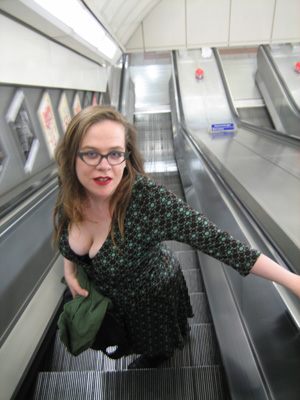
    At the weekend Iain and Xtina went to Margate to watch the Exodus and generously loaned me their flat. Since coming back to England I’ve mostly reverted to my uniform of old tattered black clothing, but I elected to wear a dress for city adventures:

    I went to drinks and dinner with David. One of his friends asked how we met and I had the thrill of replying Standing on line at dawn to buy tickets for the first ever Madonna Like a Virgin show in 1984 – with the Beastie Boys opening. 

    David added And they were booed off the stage!

    I attended countless concerts as a teenager, many of which were no doubt of great historical importance. I did come of age in the NW in the eighties, after all. But for some strange reason the people I met that cold morning at age thirteen are the rare few I am willing to know as adults.

    The concert itself is also more memorable than any of the seminal punk shows, though for a reason I never talk about: it coincided with the worst bit of my cancer treatment, and I spent the evening with my head pressed against the guard rail, wretchedly ill.

    Later David showed me one of the shops he owns:

    Then we walked over to his other store, housed in a building constructed in the 1650’s. We wandered about admiring the wares until David said Would you like to see the cat?

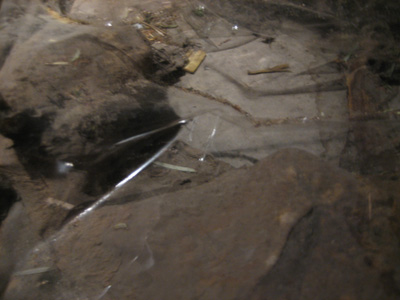
    He grabbed a screwdriver and started to prise up the floorboards:

    Apparently when the place was built there was a tradition of burying a live animal on the premises for luck.

  • In the week before Rachel moved to Montreal she called several times trying to arrange meetings, failing to remember that I do not use the telephone. Even though it was critically important that I answer, I simply could not – I just stared at the screen and hoped that she would follow up with a text message.

    The public risk I elected to attempt at Happy Ending last winter was deliberately chosen as an effort to crack my phobia. Sadly, the treatment was not a success.

    But if I hate anything, it’s weakness. There are some constraints in my life that are necessary, but others are just deranged.

    Yes, talking on the telephone generates an instant panic attack. But sometimes it is important. When I realized that I had nearly missed the last chance to see a good friend I resolved to answer the phone from then on.

    Of course, since I did not state my intention, nobody called me.

    Seven weeks later, standing in front of the Bus Stop in the middle of the night, I told this story to Mark Mitchell. He decided to be mischievous and call me periodically through the rest of the trip.

    And I answered.

    The phobia is still just as strong, but I persevere. Old friends are used to the fact that I do not use the device, but Jean is innocent of that knowledge, and so has become one of the rare people to hear my demented voice at the end of the receiver.

    In the states I used the cursed device to interact with Gordon and Ana Erotica. I’ve even talked to my agent on the phone about good news – two separate things that  makes me panic!

    Who knows. Perhaps I will place a call myself one day.

  • I’ve just been informed that my presence is required at a black tie function at King’s College.

    My agent also tells me that there are fancy dress literary parties in my near future.

    Clearly, this means that I will have to fly to the states to buy a new dress.

  • This morning I attended a harvest festival celebration in the Jesus College chapel. Staring about in bemusement, it struck me again that I live in Cambridge.

    This place is literally as far away from my rural working class provenance as it is possible to get, without learning another language.

    I ditched my culture and country on a whim; the results could have been disastrous. The fact that I sometimes sort of like the place is…. rather peculiar.

  • Oh look, another discredited book: I read her book from beginning to end and wanted to get a pen out and cross out everything that was not true.

    The puzzling thing is that the publisher, as has happened with similar cases, claims to have vetted and verified the material. Perhaps my experience is unusual, but three publishing houses in three countries have handled Lessons in Taxidermy without ever once inquiring about the accuracy of the content. Five or six others have published excerpts. Some of the material has appeared in newspapers. Etc.

    My stories are of course true, except the name changes and the omission of a few identifying details that would distress family members. I can even prove it, since so much of my life has been conducted in hospitals and courtrooms. There are medical records, testimony transcripts, photographs of my lacerated body, and of course, visible scars.

    But critically, the editors have not asked.

  • When I repudiated January and my birthday I gave myself an alternate day – September 9 – to commemorate buying the boat.

    Boat Day was quite splendid the first two years. It is a genius time to go cruising up the river – cold, calm, easy to navigate, with migrating birds everywhere.

    Unfortunately, I forgot to celebrate my own fake birthday last week.

    And, as today is the sixteenth anniversary of my idiotic teenage marriage, it seems like a bad time to wedge in any kind of compensatory partying.

  • Over the course of the summer I claimed that I was not working. Or rather, I believed that I did not accomplish anything, despite the fact that I finished several interviews, published an essay, continued to whittle away at two or three secret projects, and mostly stayed on top of all the technical aspects of running an online magazine. Even while hanging out with friends I was deeply immersed in research; my notebooks are full of observations and character sketches.

    The problem is that my work is only tangentially related to producing anything real and concrete. For the most part, I think. The value of any particular thought process is impossible to evaluate; it is not possible to know in advance which fleeting impression will be useful, let alone what will be published.

    If I am sitting in my pajamas eating cinnamon jelly beans and obsessively checking social networking sites, an observer might think that I am not working. But perhaps I am considering adjustments to the sites I run. Or I could be doing research for a story. Or I might be corresponding with far-flung friends and collaborators, which is necessary to maintain my sanity and productivity.

    I wouldn’t be able to categorize the experience if pressed. I’m not even sure that writing this sentence constitutes “work” though it would appear to fall in that category.

    Last week I was pondering an essay about street racing in the rural Pacific Northwest. To facilitate the process I retreated to London, where I elected not to socialize with any of my friends. Instead I visited the British Dental Museum. I spent most of one day at the Hunterian. I also took my kids to the Tate Modern to see an installation of work by Pierre Huyghe.

    Along the way I read several newspapers, two gossip magazines, started Gilead, and contemplated an essay about the nature of storytelling by Michael Frayn.

    Did these excursions relate in any way to the topic I was writing about? Yes and no. While a pilgrimage to stand in front of Caroline Crachami’s tiny skeleton might seem a waste of time, I am concerned with the question of who owns a story – the participant, the author, or the audience? Dr. Hunter’s curiosity cabinet, while fascinating, contains many specimens collected by dubious means.

    Charles Byrne did not want to be displayed, yet here he is, a human rendered and left to languish behind glass. Or what of poor Mr. Jefs, plucked from his grave?

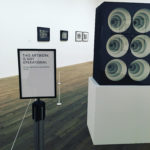
    I went to the Tate somewhat haphazardly, without knowing anything about the artist or his work. The first object in the Huyghe exhibition is a huge neon sign proclaiming I do not own Tate Modern or the Death Star.

    The objects and films in the gallery proposed questions about place and possession that reflected all the points I was considering while assembling an essay about riding in fast cars before I was old enough to consent to the race. The Frayn essay offered observations about memory and subjectivity that were directly pertinent to my ethical quandaries in writing nonfiction. The Robinson novel contained the sentence It seems to me some people just go around looking to get their faith unsettled.

    Wandering through a city visiting museums, sitting in pubs taking notes, exchanging text messages and email with friends, even staring vacantly at rivers are all integral to whatever final product I create. The fact that it doesn’t seem like work probably has more to do with my class antecedents than any true value of the experience.

    I am paid to do this, after all.