Year: 2006

  • Jeffrey postulates that the reason I am so obtuse about flirting is simple: I do not know how to accept compliments.

    This is true. I was thirty years old when Ariel pointed out that furrowing my brow, or clapping both hands over my face, or ducking under the nearest table was not the best response to praise. I asked her what I should do instead. She sighed and said Smile. Say thank you.

    I’ve been practicing ever since, and getting progressively better, particularly with sartorial subjects and at public events. What I can’t handle, still, is the big stuff. When something really good happens I do not jump up and down; I retire to my sickbed and moan.

    When the fact that the Orion contract was real hit me — approximately two months after the sale — I was standing in the road in front of the college where Oliver Cromwell’s head is buried. I burst into tears (a rare event generally, and an absolute taboo in public) and wailed Why can’t my life be like a John Denver song?

    The meaning of that sentiment is obscure even to me, but can probably be translated as Why can’t I have a simple, ordinary, normal life?

    Though as far as that goes, John Denver might not be a very good role model.

  • One of my friends just reported her therapist says that I am a bad influence.

    Presumably because I counsel: Less talk, more action!

    I’m off to Barcelona. Happy Independence Day!

  • In case you are interested, an upcoming issue of Bitch  includes an essay I wrote about porn. I was also interviewed for the Body issue of Clamor.

    Of course, I don’t think that my opinions are controversial. They are simply correct.

    However, that does not mean that I have made much progress on certain core research projects. Recently I was reading a book about nonverbal communication and learned that many people find the application of lipstick sexy.

    I find this information puzzling; I only dimly understand that wearing red lipstick has any meaning whatsoever, and that evidence is strictly hearsay. I certainly do not paint my lips as a come hither signal – in my mind the choice is anachronistic, not seductive.

    I am not happy that anyone might get an illicit thrill by watching me smear something on my lips.

    Though this won’t change my behavior or anything.

  • There are two things I genuinely appreciate about the UK medical system. The first is the fact that medical staff are extremely polite, and appear to care about their patients. They even have the decency to look sad when they deliver bad news.

    The second is a related point: when you are obligated to have tests like, say, a pelvic ultrasound, the raw data is delivered immediately. There is no delay while assorted professionals evaluate information.

    The nice woman wielding the wand of doom yesterday afternoon pointed to the image of my right ovary on the monitor and said I’ve never seen anything like this before with a puzzled and concerned expression.

    Of course not. It is, after all, my body.

    My annual Big Cancer Scare is generally not very interesting. It happens too often and I usually just feel annoyed. But since I recently decided to possess and exercise appropriate (some would say normal) emotions, I spent all of yesterday feeling a sort of mild terror.

    Or at least observing myself attempting to feel scared; I’m still learning, after all. It is sufficiently difficult to remember that any of it is true.

    Byron (along with many of my friends) takes the position that I am like a cockroach and can’t be killed; a brief consultation with him yielded the further wisdom that if I have a new and lethal cancer, at least I’ve had fun along the way.

    I’m not a big fan of sympathy so I didn’t bother to mention the matter to anyone else, aside from involving Gabriel in a quest to find the phone number of my stateside oncologist as I have conveniently forgotten the name of not only the doctor but also the hospital.

    I shed a few self-pitying tears, berated myself for crying, and went out to dinner. Then I watched that double episode of Wonder Woman featuring Debra Winger as Diana’s ditzy younger sister.

    I walked into the appointment this morning fully prepared to hear bad news. Imagine my surprise then to hear a doctor informing me that the thing described by the technician is no cause for worry. In fact, piecing together the facts, it is probably a scar.

    The growth that was under surveillance three years ago has vanished.

  • How do you recognize someone you haven’t seen in eighteen years?

    Particularly if, aside from growing up, you have also created a new life far away from all that is familiar and dear? Surely we had both changed so much it would be impossible to find each other in a crowd.

    These were the questions tumbling through my brain as I walked toward a Clerkenwell pub to meet David, who I haven’t spoken to since 1988.

    When I found out that he lived in England I elected not to get in touch for a long time. I figured that he had remained lost for all those years because he didn’t want any of us to find him; I know very few people from my youth, and prefer to keep it that way.

    Why, then, get in touch?

    Because he left in a clean and subtle way, without getting tangled in the drama that destroyed the group. Because I remember that he always made me laugh, and that he enjoyed the macabre excesses of my humor. Because we ended up in the same place after all this time.

    The answer of how to spot him was quickly revealed: we both, for some inexplicable reason, look the same.

    My hair is long and tangled and of indeterminate color; as always, I wear weird spectacles and inappropriate clothing; the only real difference in my public persona is that I laugh without covering my mouth.

    David still has short dark hair and sharp garbed demeanor and burning wit. The main difference in his manner is the acquisition, after an adult life away from home, of a hybrid accent. He no longer pronounces Olalla the way we would have back in the day – and since my own grasp of rural colloquial phrasing is draining away after only two years in this country, it was fascinating to listen to him talk.

    It was a shocking thrill to find that the particular aspects of our personalities that were dark and hidden are now the most visible and pure portions of our identities. What we could smell on each other back in 1984, those profound needs that would create our small community and later drive us away from home and out into the world, are no longer secret.

    We grew up and out and into new lives, and that is a dangerous thing, because it requires shedding the old life along the way. But we are still fundamentally just an inverted form of who we were all those years ago.

    Meeting again was a risky proposition, and could have been a tedious exercise. I’m sure that he felt the same – what a potential bore to offer up your Friday evening to someone you knew, briefly, as an eccentric teenager in a poor mean town, particularly if you currently have a brilliant cosmopolitan lifestyle.

    But we had drinks, then dinner, and then he showed me around his amazing flat, featuring many of the objects I am most obsessed with. I offered up a few morsels of breathtaking gossip about those who have gone astray, but mostly we talked about the years we haven’t known each other. We talked about living in Europe, and the experience of leaving home.

    There is something tremendously valuable in knowing a person who remembers the same stories, and has a similar perspective on that beautiful wretched town, without needing to talk about what happened.

    The most important thing is that we left.

  • When people ask me what I do now I try to change the subject. Failing that I give an addled and incomplete version that is often willfully deceptive. When someone else seizes control and tells the full truth I feel a flush of embarrassment and my ears turn red.

    But since I live in a place where many people assign high value to professional credentials, the question comes up all the time. I’m not getting better with the answers.

    But, delightfully, people often inquire about your educational background, and last weekend someone asked about my thesis.

    Now, remember, I finished graduate school twelve long years ago. But I did not have to pause or think before I replied I used a participatory research methodology to examine the implementation of federal civil rights laws at the state and local level.

    Sigh.

    I do not miss that career. Though it was easier to explain.

  • Recently someone asked me, with some degree of puzzlement, if I have ever experienced unrequited love.

    I laughed and replied of course not.

    Nothing is impossible, but I doubt that I ever will. Doing so would not be efficient.

    Another night I was talking to a different person about similar topics (conversations with me veer around a bit, but can generally be described as investigative journalism) and I flourished one of my favorite old talking points, never once disputed: that nobody has ever had a crush on me, because (goes my logic) nobody has ever confessed such a thing. Much to my surprise the person I was talking to looked mildly dismayed and said But I have a crush on you, Bee. A friend crush. 

    I furrowed my brow and demanded to know why this would be so. In detail. Which of course I failed to remember, but the larger point did stick in my mind. Perhaps I think that I’ve never had a crush on anyone because my definition is flawed.

    Because, if a crush is defined as a flush of raw energy and instant attraction, I experience it routinely. That is the zap I often get from friendship, which for me is a very cerebral and endlessly entertaining experience. And, although my friends are often crazy, dangerous, needy, broken, or sinister, I love them. In fact, if I am being honest, my friends have broken my heart — and I expect they will continue to do so. Friendship is an imperfect vessel for intimacy.

    The other kind of crush still strikes me as perplexing, and will require further pondering.

    I suppose that I would be a happier person if I had figured all this out in my murky youth. But then again, maybe not.

  • In the continuing dreary saga of my genetic disorder there is one appointment that I detest more than others, and today was the big day.

    I literally will not go to gynecological oncology unless a minder drags me to the hospital. Thirty minutes before I was supposed to be at Addenbrooke’s I was meandering about the city muttering that I would just skip the whole thing. But in the end, Byron forced to go and sit for hours in a waiting room chock full of people waiting for a death sentence.

    When I was finally called in to see the doctor (aka the leading expert in the country) he shook my hand, opened my chart, and said Oh I do apologize. You should have had your scan before this appointment. 

    He asked the basic questions and I gave cursory responses followed by the comment that I’ve been waiting eighteen months for the appointment. This led to another apology and a scramble to sort out urgent testing and consultation appointments, unfortunately spread over two days next week.

    I always jump to the front of the queue when the specialists see my file.

    But this means that I’m losing three work days (and imposing on a friend to take the time off to supervise my behavior) for a loathsome test that everyone agrees should have been done two years ago.

    The results had better not upset me. I am too busy for surgery at the moment.

  • When I moved here I was bemused to find that the first question people ask isHow long are you staying?

    The answer matters because people move in and out of this town all the time, and some of the folks who stay grow weary of the fact that their friends move away.

    At first I didn’t mind; I think that it is useful to know people all over the world. It is also true that most of my friends here are either faculty or work in research labs, so they’re relatively permanent fixtures.

    But the moment has arrived – one of my favorite people is finishing her PhD and leaving to assume an academic post in another country. Oh no! Whatever will we do without Rachel’s sunny presence?

    To compensate for the imminent loss I spent the better part of the weekend with Rachel and her peers and learned many interesting things about academic life. When I was actually young I was neither friendly nor decadent, so the last few days have been rather novel and amusing.

    I’ll definitely have to visit Montreal now.

  • During my recent travels I met an astonishing number of people who had major visual disorders as children.

    We who grew up with fractured vision are an interesting small minority, unable to play sports or accurately judge whether a cupboard is about to smash into our faces. But most of us learned an early shame over the fact of our strabismus, and until now it has been rare for me to find anyone to chat with about the subject.

    For most people, growing up without depth perception is complicated but not intolerable; the mind adapts to the challenge. Mine certainly did – it was the corrective surgery at age fourteen that disrupted my ability to track and organize visual cues.

    Though I did gradually develop from partial to full stereoscopic vision, it was disconcerting to say the least, and while I can pass simple 3-D eye tests there are many other things I can’t do. Over the last twenty years I have often chosen to view the world with one eye closed, and it has not escaped my notice that this is symbolic.

    But tell that to a person with ordinary vision and you are met with dismay or embarrassment. Between my vision, the cancer, and the genetic disorder, not to mention the oddity of my career and lifestyle, there is very little I can say in the course of an average conversation that does not at least glance at a controversial or alarming topic.

    I find it shocking that over the last few months I have ceased to care about such things. My reticence has fallen away without warning.

    Tonight I was talking to someone at a party and mentioned my childhood cancer as it was pertinent to whatever topic we were trundling through.

    He stopped, looked pensive, and said I’m sorry. 

    I laughed at him and said No you’re not. That is just a platitude.

    He thought for a second and then agreed.

    Our conversation proceeded to veer about in a perfectly pleasant fashion. It is so refreshing to meet people who are honest about these things.

  • The UK publisher asked for a selection of images spanning my entire life. This required opening the archives – oh my! I tend to keep everything… but also occasionally hack up stuff that makes me unhappy.

    Why are there big holes in my graduation photographs? Hmmm. I don’t even remember the names at this point…..

    If you knew me back in the day and are reading this, rest assured I do not plan to let the publisher see any of the pics of us frolicking about as teenagers. Though we were all so cute! I didn’t know at the time.

    This is from James’ juvenilia, all of which he burned shortly thereafter. Good thing I grabbed a print or two.

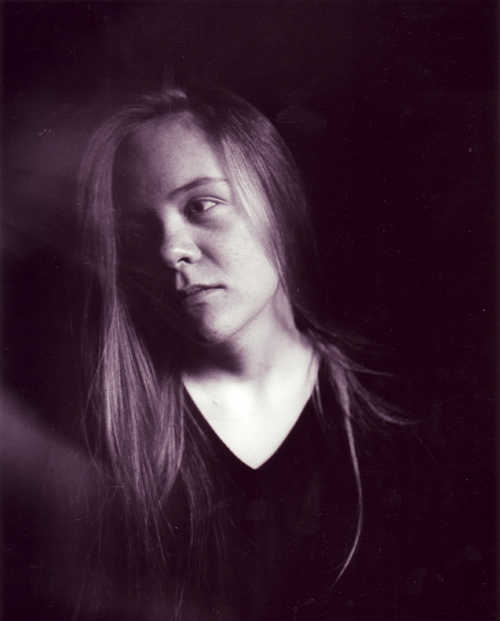
    Me in 1990 (age 19):

  • If you know a writer, you know someone who has a major grudge with the publishing industry.

    Our complaints are exhaustive; we are an articulate and grievous crew. We are in fact upset about too many things to bother documenting the sundry details. When we meet, we often trade bitter anecdotes that are interesting only to those who suffer the same indignities.

    People who have never published books do not understand our pain.

    From what I can gather, the issue that causes the most distress is the inevitably disastrous book cover. I can say with some confidence that I do not know anyone who has been satisfied with the way their books look.

    Why? Again, the reasons are too numerous to count. Sometimes the grievance is legitimate – lots of ugly book jackets are published every year. Others are more subtle. Fundamentally it often boils down to the simple fact that someone else controls the manner by which your creative work is represented.

    Even if you have some measure of sway in the decisions the process is not easy. I hated the cover of my first anthology because I thought the imagery had poor symbolic value. That experience persuaded me that I needed creative control over other books. But the second anthology caused great distress because the idea and artwork executed by a fantastic designer (and close friend) was changed by the publisher.

    I was able to suggest and use the work of a friend (who also shows up as a character in the first chapter) for the memoir, and liked the results very much. But each time the book is published in another country the whole matter of the cover comes up again – and the new publisher has to make decisions about what will help sales, and they are obviously more conversant with their own culture than I could ever be.

    The Swedish edition of the book had the same cover, but a translated title. The U.K. edition will have the original title but a different cover.

    Wednesday evening I had a peek at the draft of the new jacket, and I have no idea how I feel about it. I furrowed my brow and consulted with my agent, and various writer and artist friends. Then I went on an odyssey through the bookshops of Muswell Hill and Crouch End, looking at covers and taking notes.

    Iain very patiently joined me as I scanned shelves to find books published by the same company to compare with the cover they propose to put on mine.

    It is nice to have friends who indulge my paranoia.