Year: 2008

  • Today Dani called to say that she is visiting Exeter, which reminds her of Evergreen except populated entirely by Paris Hilton clones.

    Now that is a mental image!

    She will be in the UK long enough I can almost certainly arrange a visit, even if I have to take trains to exotic destinations like Brighton. Hurray!

    The phone call kicked off an afternoon remembering things like the night lots of Chorus members congregated at the Jockey Club (grubby dive bar in North Portland later demolished) to play Truth or Dare, and Byron made out with a taxidermied moose, someone stripped, and the smoking hot ambiguously gendered bartender kept throwing down shots, then danced on our table.

    When the bar closed we staggered a few blocks to the house where Ana Helena lived and she cooked a feast of corn tortillas with cheese and salsa verde over an open flame.

    I don’t think Dani was around that particular night, but now she lives in Italy – the closest person in geographic terms offering a connection with those times, except when Ana Helena intermittently shows up in Barcelona.

    There are dozens of additional NW friends I would dearly love to spend more time with, but only a small number have remained in the old haunts. I was not the first to hit the road. One of the significant features of my homesickness is the knowledge that even if I went back to the same exact place, it would not be the same experience.

    My kid laments his displacement in extravagant, exquisite language. I listen and offer comfort but it always seems that, while he truly misses the place, what he is grieving is not the loss of a community or homeland but rather, the end of his infancy.

    I completely agree.

    Portland, 2000:

  • The family member recovering from heart surgery has made huge progress, though he is now dealing with the complications of a blood clot.

    I’ve been sad for him and fretful because I am too far away to be of any practical assistance.

    This morning somewhere before dawn my internal alarm bells started up a mighty clanging and I was worried that there might have been a change for the worse, so I hustled to check email, only to find that a different faraway family member is in the hospital with chest pain.

    Marisa’s Holiday Motel album, and the pain intensifies to a nearly intolerable level. The songs evoke recognizable landscapes – Portland, Swan Island, crowded bars and romantic drama, the stages we’ve shared, the long empty roads of the west, an ICU waiting room where we sat together waiting to hear if Stevie would survive.

    Marisa is one of the rare people I can turn to for comfort, but with an ocean and two continents separating us I’m left listening to a recording of her voice singing I won’t follow any road signs, won’t look at any maps.

    It is impossible to go back, or forward; life has to be lived in the present. The medical misadventures of my stateside relatives, my own experiences here with the NHS, and the worldwide banking crisis underscore the reasons why I moved away.

    The principle that time heals all pain is valid, and I have recovered from every messy wound regardless of circumstance. The good things – the ability to take risks, wander, love, leave – have proved much more difficult.

    I miss my friends and family more as the years pass – a hopeless, dreadful heartache that never mends.

  • As a general rule I forget to eat while working, subsisting on cinnamon jelly beans and pistachio nuts with the occasional can of soup. But sometimes those provisions run out and I have to brave the mid-day tourist-infested city to buy food.

    Today was that kind of day, and I reluctantly put down my pen to venture forth to the M&S at the Grafton Centre, on the principle that it would be less crowded than other options while offering all the items I desired.

    While shopping I was mostly distracted by irritations like the fact that packages of raspberries of the same size and price were from either England or the United States.

    This would be exactly why I normally shop at the farm store, relying on them to sort out what is local and fresh. I’m not any adequate kind of environmentalist, but come on – you do have to have some standards in this life.

    Today speed was necessary so I picked up a simple medium sized salad, two small packets of localish (I’ve at least been to Kent) berries, two bottles of water, and a newspaper.

    When the clerk rang up these selections my mouth literally dropped open with shock over the total: eleven pounds.

    This is fully one third more than I would have been charged a few months ago for the identical items.

    My idiosyncratic habits mean that I have mostly been isolated from price fluctuations in food since the economic meltdown started, though I have read about it. Yes, bread costs more, but I make most of my food from scratch, and stick to simple menus. Or I eat out. Significantly, what I paid for my spartan (albeit pre-packaged) lunch was more than I would pay for a noon meal at a chain like Wagamama. Even with a glass of wine.

    I have noticed the increase in heating costs, and that it is simply more difficult to get fuel, though I do not drive so that has been a minor concern. Rising airline costs might have worried me, if I could travel. I had trouble rounding up money to deal with necessary repairs on the house Gabriel rents from me in the states and had to sell stuff to raise the cash, but that can be attributed to my own paralytic fear of debt.

    Other than that, the spiraling economic crisis has had no direct impact on my life, because I predicted it would happen and have strategically divested myself of everything, before anyone could snatch it away.

    Beyond that I do not expect to live long enough to retire, so I don’t need pension accounts. I’m not willing to put money in education accounts since I paid my own way through school and feel my offspring should also have a work ethic.

    I sold the last of my high tech stocks about ten seconds before the market dropped. Not for a huge profit, just for enough money to fix a perilous staircase and paint the bathroom of a house I haven’t lived in for over six years that might be considered an investment of sorts if I charged market rent. But I’m not that person – I subsidize the people who live there because they are friends.

    Canny? No. Paranoid is more like it – though I can’t really help it since the grandparents who helped raise me lived through the deprivations of the Great Depression and inculcated their values. I was taught to work hard and take care of the people I love, but there was never any aspiration for more than basic subsistence.

    I also studied economics as a mandatory subject in a public administration program, and came of age during such a grim time the speaker at my graduation ceremony warned us we would never get jobs. The (student selected!) theme when I finished grad school was You want flies with that? – a jest on the concept that we wold all end up working the counter at a burger joint.

    Despite my avowed adult commitment to ascetic poverty I have always had a natural sense for money, buying and selling cars and houses and ephemera at huge profits, jumping in and out of jobs or homelands or marriages with some kind of strange instinct for survival.

    I have a rare genetic disorder and corresponding need to be fiscally stable to stay alive, more than many of my peers, and it takes real effort to piece together all of the subtle clues to know exactly how to achieve that state.

    My obsessive newspaper reading habit has not been this bad since the early eighties, when I was a notorious and frequent contributor to the letters to the editor section of my hometown newspaper. (Back then I was probably most worried about the fact that I was, oh, dying and all, but I sublimated my fears with a campaign of criticism that saw me published, and the subject of two feature stories, before age thirteen.)

    The news this week from the financial sector has been so hugely historic I can’t even begin to address it – nor can most of the press, reeling along with our assorted politicians. The fact that the crisis will have a decisive impact on the U.S. election is of course rather thrilling: I pessimistically predicted the Democrats would not secure an electoral college majority, but now I think it will be a victory in their favor and a true mandate for change.

    Otherwise, the news has been horribly frightening.

    Many issues that would normally be front page are being shuffled to auxiliary sections of the papers, and this is dangerous. I never read the sports pages until I use them to light a fire but I could not ignore the headline Olympic village in line for 1 billion pound taxpayer bail-out.

    Apparently they were relying on private banks and developers to ante up, then make a profit later to justify the expense. As one did, before the autumn of 2008.

    This is the reality of supply side trickle-down economics – all of those public private partnerships so favored under not just Tory or Republican but also New Labour and New Democrat administrations?

    Watch em crash and burn. If payment is not compulsory, it will not be made.

    There was a point in nationalizing industries and investing public funds in public infrastructure, not least normalizing and forcing minimum standards of service. Today we have news that numerous UK agencies, from children’s hospices to regional governments to universities to fire fighter retirement funds, put their money in accounts held by banks that just failed in Iceland. In other words, we have a big fucking mess to sort out.

    The prime minister responded that he is willing to use anti-terrorism legislation to address this appalling yet, let us be clear, elective disaster.

    Really? Is that why the laws were devised? Even my cynical sad little brain had hoped for better, on so many levels.

    I’ve managed through excessive and semi-obscene effort to protect myself, at least for a little while. Lots of my friends and family have not, regardless of class, culture, country, education, inclination, intelligence. Most people I know work hard for admirable, basic, and rational reasons – to raise or care for family members, live decently, have a little fun.

    None of us deserve the consequences of a systemic and predictable economic failure, though we will be the ones to pay.


  • I have zero interest in the academic schedule but I know the students are back because, once again, there is no bread anywhere in the city.

    During my search I stopped at the farm store and was completely delighted to find that after a recent chat they are now stocking not only kale but also fresh ginger and coconut milk. If they get bread back in I’ll never have to go anywhere else for food!

    Though when I trundled over to Bacchanalia for water I mentioned this and the fellow at the counter said he already knew because I came up in conversationthe last time he was over there.

    Oh no!

    Remember, I’m used to being invisible.

    I do not like the new phenomenon of people talking to me, let alone talking about me.

    Whatever now? I already had to bribe someone to go to the dry cleaner this week. I can’t outsource vegetable shopping!

  • For the most part I ignore my own dreary medical drama. There isn’t enough time in life to accommodate all the good stuff: adventure, travel, friends, love, lunacy.

    This does not mean that I am exempt from fear and grief. I just save it up until the crisis has passed.

    Riding the bus back to the city centre after my appointment, I could feel my heart racing, see my hands shaking.

    Since I didn’t have my bicycle I could not literally ride away on a wave of anxiety, so I did the next best thing – talked to a friend who mocked me into a reasonably calm state.

    Then I went searching for gifts for new babies, sweet boys, sick relatives.

    At the toy store I queued up clutching a Playmobil figure without paying too much attention to my surroundings.

    Apparently I had accidentally dropped in on a fashion conversation because the woman at the counter gestured and said Now this lady is chic.

    I stared about in amazement since you would never normally see such a creature in this town but she was pointing at me.

    Huh? What? I’m no lady (fill in your own vaudeville joke here) and my tattered sartorial state does not equate with ‘chic’ even on a good day.

    I was not having a good day.

    Though I have a special leftover childhood reserve of anxiety over what to wear to visit the doctor, this has in the last few years mainly translated to concepts like wear clean clothes that cover the tattoo.

    And that was the extent of my effort to prepare for the cursed cancer tests. Head to toe description: tangled unkempt hair, dark sunglasses, black wool scarf, demented and very wrong green plaid blazer over black jumper, black skirt, threadbare and slightly torn black tights, ugly black orthopedic shoes. Covering a body ravaged by disease and figure not even remotely popular in this century or my lifetime.

    The only possible explanation for why this reads as stylish is the way I hold myself, and I will admit that I am bold and dismissive. I don’t know or care what anyone thinks of the way I look even if they shout it in my face – whether a criticism or compliment, I am immune. The only reason I noticed this particular exchange? I was in a toy store in Cambridge England.

    These things do not happen here.

  • If I had been truly worried about breast cancer I would have raised all holy hell to get an earlier appointment, but my hunch (despite significant symptoms and family history) was that it would simply be too absurd to have yet another diagnosis.

    This belief carried me across town and into an examination room where a very kind woman poked and prodded at the suspect tissue.

    I was expecting her to take a look and send me home. Instead, she pulled out a pen and drew a big red circle on my body, telling me that a mammogram would be “offered.” Immediately.

    We had a short and concise discussion about the radiation risks, during which she informed me that there is no funding for MRI testing for breast cancer screening in this NHS trust no matter what my geneticist recommends.

    Opting out of testing altogether was not on offer.

    I walked out to the lobby in a haze of confusion – before that moment I had been intermittently dismayed, concerned, and angry, but I had not experienced fear.

    There was no time to indulge in terror because I was called to the xray suite almost immediately.

    Having a stranger wrangle your breasts into position to be squeezed by a machine is certainly not the most pleasant experience but halfway through I said in amazement This is easy! I have way worse tests all the time!

    The technician replied You are the first person who has ever said that.

    Then she told me that I needed an ultrasound.

    Here is a significant difference between the states and the UK – each of these component tests back home would be scheduled with days or even weeks between, and cost an enormous amount of money.

    This morning I trundled from room to room with the big red circle defining danger as the experts sorted it out – for free.

    Reclining half naked waiting for the sonogram to commence I told the story of how, freshly diagnosed with thyroid cancer, I was totally psyched to hear that my first ever ultrasound proved I could not have needle aspiration. Why? Because I had a paranoid fear of needles.

    I was eleven years old and had no relative clue that surgery was in fact much more painful and scary. Let alone that the diagnosis they were developing included the word terminal..

    Life, death, whatever – I was just a little kid, even if I didn’t know it at the time.

    Many people have fond recollections related to ultrasound, because that is often their first glimpse of a beloved baby. Me? It is all about tracking diseased ovaries, failing kidneys, scar tissue strangling organs, decay, rot. Even the tests performed during my confinements (and I use the term deliberately since both pregnancies were conducted almost entirely on medically ordered bedrest) were mostly about answering questions like – is the spine growing inside or outside?

    This morning, one arm behind my head, I watched the screen as the technician dragged the magic wand back and forth to evaluate irregularity and viscosity.

    We stared silently and shared the knowledge – all clear.

    It is official. I do not have breast cancer – or rather, I do not have breast cancer today.

  • Last night I had dinner with two fellow cancer kids and one person who has a chronic life-threatening illness.

    The relief I feel in these situations is enormous – I never censor my conversation, but it can be tiresome to deal with the emotional reactions of healthy people when the macabre and hilarious anecdotes slip out.

    Tomorrow is the big appointment with the Breast Clinic and I am reacting in a predictable way: bickering with a friend over whether or not I need an escort. I say no but the consensus amongst those who know me in real life is that I may well bolt rather than attend.

    Whatever!

    On a related topic, I’ve been obsessively watching the economic news and have developed an urgent desire to move to Ireland or Luxembourg or one of the countries making sensible efforts to guarantee financial institutions.

    This follows my instinct over the last few years to cancel all of my credit cards, pay off the student loans, close my bank accounts, and take up residence in a country with socialized medicine.

    I spend every cent I earn immediately, or give it away.

    I have no assets, no pension, I own precisely nothing of value – for purely pragmatic reasons.

    I remember the brutal experience of selling off the family homestead to pay for grandpa to enter a nursing home. I remember my great-grandma living in a shoddy metal trailer at age 99 because anything nicer would mean losing her government aid, after a lifetime of hard work and decency.

    I know exactly what my childhood illness cost, even with insurance, and I was mortified to watch my parents lose everything as they worked double and triple time to pay my medical bills.

    If I get sick again (and the news might arrive as early as 10am tomorrow) I would rather be proactively indigent than watch my family spiral into bankruptcy to care for me as I die.

    Eminently sensible, yes, but also tremendously frightening. What a waste of resources – I would be a diligent earner and saver if only I felt safe.

  • I’ve been reading fashion magazines (as one does when the world economy crumbles) and I am baffled once again by the forecast that “pale white skin and bright red lips” constitute a major trend for the autumn/winter season.

    It is a look I’ve been fronting for well over a decade, in several different countries and the most fashion forward communities, without meeting more than maybe five other people who also ascribe.

    This particular trend prognostication happens about every eighteen months, with no discernible impact on street culture. It just doesn’t work for a lot of skin types, and anyway, the hassle factor is quite extreme.

    Who would bother? Only the most obsessive, and you know what? We aren’t doing it because some random magazine dictated the choice.

    In a similar vein, the menswear guides are pushing posh.

    Now, I live in the most rarefied of all the British cities, and often hang out with landed gentry. For real. Still, I know precisely one person who routinely wears three piece suits with all the accoutrements: my son.

    In fact, he finds it disturbing that his school uniform consists of a casual jumper and slacks. He hurries home to change into more civilized garments. Like a waistcoat and bow-tie.

    Of course he started dressing like this when he was eighteen months old, for his own idiosyncratic and compulsive reasons. I doubt it is a style that could be acquired otherwise.

    The main point though is that we are not fashionable. We’re just freaks.

  • I just got back from an obscure town in Germany where I was visiting a famous institute you have never heard of.

    Much fanfare attended this trip because they’re trying to recruit my husband to be a director, and therefore must convince me that I want to move somewhere excessively obscure.

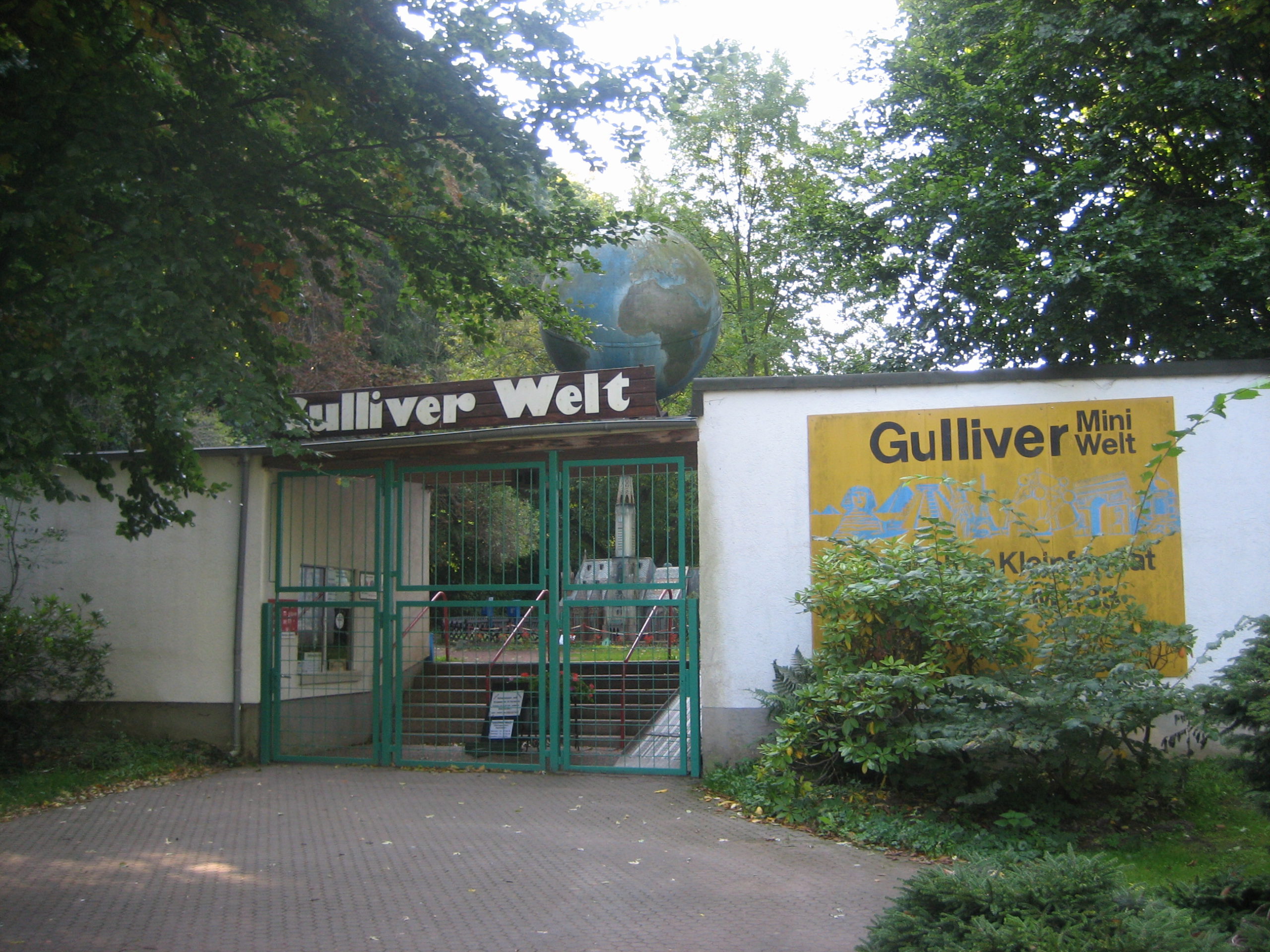
    For instance, Andrey arranged a bike rental so I could attempt to find Gulliver Welt (and he waved vaguely in the direction I should cycle).  One of the professors invited us to dinner.

    This was genuinely the extent of the efforts to persuade me; the reasons are opaque but the general impression is that I am supposed to be in awe of the prestige surrounding the institute. Furthermore, I am supposed to so supportive of aforesaid husband I am willing to move to the middle of nowhere, give up my career (because my immigration status would not allow me to earn money, though I could “always volunteer”), and accept that as a spouse I only qualify for a visa renewed every year — whereas my husband, as a director, would have permanent residency.

    Other fun facts: while my husband would have guaranteed private health insurance (the best in the world) that benefit does not cover spouses. Upon further review, the institute suggested that I could make do with the public system, although accessing it would mean getting a job, which is (review previous paragraph) technically not viable for someone with the type of sponsored visa I would have.  Or a foreigner with pre-existing conditions, regardless.

    Hey, guess what? I smell a “not consistent with EU immigration law” kind of thing here. Though as an American, I’m not protected by EU regulations. The larger problem is that there are no jobs in my sector in the region. The institute has a solution though! Someone suggested they could create a job for me. I could be…. long pause… something…. what is it I do again? Oh right. There are no jobs in my sector in the region. Back to the “support your husband, sacrifice your entire career and everything you care about, because he is an important man who has been offered a very prestigious job.”

    All of which is unacceptable but amusing. The best part though? The institute seems puzzled that I would even enquire about a visa for my high school age child.

    Hmm. Guess we’ll see if I take that deal, huh?

    I am however a fair person so I didn’t want to say no without due diligence. Just about the only thing that could convince me to move is improvement in the quality of housing, so I requested the department arrange some viewings.

    One included a top floor maisonette with a few of the river, the hills, and vineyards stretching all the way to France. When I arrived the tenant, a stranger, looked puzzled and said Have we met?

    I replied no, on the principle that her scientific career does not intersect with my life in any way. We have nothing obvious in common, and no known mutual acquaintances. It was unlikely we had met in ye olden times, as there was no discernible overlap with my education or west coast life. She does not connect with my Cambridge existence, and definitely didn’t seem like someone who subscribes to my magazine (an assessment based mostly on the fact that she does not have children, but still, a safe bet).

    At some point she mentioned doing her postdoc in Montreal, then frowned and said I think your name came up?

    I shrugged but then she was describing the apartment she subletted and I said From Rachel?!

    Why yes – indeed – this random person who could not conceivably know me otherwise did in fact rent an apartment in Canada from one of my best Cambridge pals.

    These coincidences still creep me out no matter how often they happen. Also: Gulliver Welt was closed.

  • Recently I went out to lunch with David. We were chatting about his move from Cambridge to Sacramento and the culture shock (and seasonal allergy risk) of going back home.

    I described a few of the places I might move next, holding up two hands to mime weighing the options, and asked Which one seems more me?

    He laughed and said I don’t think you will ever fit in anywhere, Bee!

    This is a valid observation.

    There are certainly cities that offer a closer match to my extracurricular interests, other places where I enjoy the company of good friends, still others where the landscape offers consolation.

    Yet, despite the affection I feel for those places, I live here on purpose.

    When I make a major life choice it is always perilous and precipitous. I am sure that I will leave Cambridge the same way I arrived – all in a dash without a forwarding address – though I have no way of knowing when that will happen.

    Yesterday I ran into David again near the much hyped and very odd Corpus Christi clock and he wondered if I would have time to hang out again before he leaves for the states.

    The answer on reflection was no – I have film and play tickets, plus a million chores to finish before racing off to Germany before dawn tomorrow.

    Walking around this ancient city after we talked I felt awful, certainly worse than turning down the invitation warranted. He will come back, and I will visit his family in California. Our friendship will continue.

    Poking around in my brain I realized that while I was upset over the lack of time to accomplish everything this week, I was also deeply sad about other news.

    My grandmother’s health has now deteriorated to the extent she no longer recognizes anyone except my father, based on the visual cue of his bright red hair. Another family member is struggling to recover from heart surgery. One of the only grown-ups to show any degree of compassion when I was a sick kid has just entered hospice, her fight against cancer nearly at an end.

    I am intrinsically and historically rubbish at much of the work of being a daughter, niece, cousin, friend. Even my offspring will confirm that I am a strange automaton, puzzled by many elements of life that other people find easy. I don’t talk on the phone, I rarely answer email, I have walked away from every community that I call home.

    The only things I can reliably offer are organizational: I am a master planner, the queen of the deadline. I am also exceptionally calm in a crisis. I’m the person who makes the trip to the emergency room, the one faithfully standing guard in the hospital ward, the individual who can make funeral arrangements and scare up the money to pay while everyone else dissolves in grief.

    I was raised to believe that true love is expressed with direct action, and everything that has happened in my adult life has supported the concept. Words are just words, no matter how nicely stated.

    Right now it is not possible to fly back to the states no matter how much I want to go.

    I did not move here for selfish reasons, but knowing that is worse than useless when people I care about are in pain and I can’t go home to help.

    Yesterday I bought cards and sat in the market square crying and writing letters to people I may never see again.

  • My appointment with the breast cancer clinic finally came through — fourteen months after the initial referral.

    Of course, the appointment falls on one of the precisely two days I will be out of the country this year.

    Oh, and did I mention that various issues (like exceeding my lifetime safe limit of radiation before my thirteenth birthday – you know, small details) contraindicate having a mammogram? If I need testing, they will most likely do an MRI.

    What fun.

  • Remember a couple of years ago when my son’s beloved grandfather went in for routine surgery, and everything went completely wrong, and he ended up in a coma for a month?

    Apparently he had a heart attack, though the damage was only just diagnosed. He has recently progressed rapidly toward congestive heart failure.

    Today he goes back in for a triple bypass.

    This is a man who devoted his entire professional life to tending the most vulnerable people – children unable to live in foster care due to extreme abuse or illness. He is respected and admired for his devotion to saving and rebuilding young lives, and he is one of the sweetest people you could ever meet.

    I hope that the surgery goes well and he recovers quickly.