Year: 2012

  • My mother came to visit for her sixtieth birthday, and I was thrilled beyond belief to buy her a first class ticket.

    If I could make her entire life match the delights of the British Airways business lounge, I would. My mother is heroic beyond all understanding. I wish that I could write a tribute that conveyed her wit, her vibrance, her courage – but words are too limited to describe her brilliance.

    My mother is an absolutely astonishing person, and she deserves any and all treats that can be organised. This time that translated to plays, palaces, museums, and lots of time with her scandalous grandchildren. They love her, and miss her.

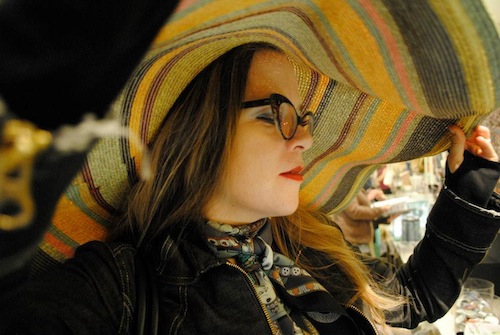
    My mother is also, of course, my mother – a job that never ends. She still tells me when daylight savings happens, and writes to ask if I’m taking my medicine properly. She has wasted thirty years in a futile attempt to get me to wear a hat, staunchly insisting that I do not look stupid even in the most extreme versions:

  • Ten years ago I lived and worked in Portland Oregon, and rarely ventured more than twenty blocks from the house I had rescued from dereliction. I had a family, community, and career, all anchored by the geography of a friendly small river city.

    I was grounded, literally, in that place and time – to the extent that I never once drove my rackety Volvo 240 up on to the freeway overpass intersecting the neighbourhood. The only significant irritation was the fact that passerby often expressed the view that I was too young for the responsibilities I had assumed. It was a good life, tidy and correct, and it looked exactly how you might expect it to look.

    But as my thirtieth birthday approached I started to wonder – is this it? I had worked so hard to drag my small family out of poverty, to give my children the life they deserved, protected from violence and insanity. But normality is so…. normal.

    I knew artists and musicians, had plenty of stimulating and eccentric friends. But our range of experience started and ended within a mile of Interstate 5. The thin corridor of Seattle, Portland, Olympia, San Francisco: it was all the same as far as I could tell. It was the where, how, who, why, and what of life. It felt comfortable. I didn’t want to feel comfortable.

    Lots of people have midlife crises. I reckoned I was not eligible, because my residency on earth is restricted – there was simply not enough time to fret and fiddle. I didn’t want to make minor changes, switch neighbourhood, partner, car, or job. None of that would have been sufficient, because I was never particularly interested in any of those things.

    I had already survived two different kinds of cancer, worked my way out of poverty, changed my social class, married and divorced, raised kids, gone to graduate school, started and abandoned careers, flirted with fame and fortune. I was always reckless and restless. Transgressive change has a different meaning when you are born and raised in chaos.

    I didn’t want to leave the Northwest, didn’t intend to change anything at all. But one day it just happened, for no discernible reason. I woke up one morning, much as any other day, except for a single small detail: I knew I would leave.

    Not just the place but the life. The music and madness of the NW, the rugged individualism and bootsrap mythology of the West. The totality of my upbringing and background. Not because it was lacking, not because I was unhappy, but instead simply because I wanted to go. I had spent three decades vigilantly seeking security, and then I decided that I wanted something else, something intangible, away, different, new.

    Life is about departure; we’re all dying, fast or slow. The question is how we spend the time we are allotted. And time, make no mistake, is a commodity.

    Before my thirtieth birthday I had never been east of the Rockies. Since then I’ve been to Paris, Rome, Venice, Barcelona, Lisbon, Helsinki, and too many other places to describe or remember. I’ve criss-crossed most of the United States on book tours, telling funny stories that make audiences cry. I’ve visited the great museums of the world, and learned more than I care to know about the ghettos.

    I’ve lived in ancient university towns, staunchly defending my working class antecedents in the face of intellectual pomposity. I’ve been the owner and captain of a canal boat, traversing narrow waterways and difficult locks without appropriate credentials or any discernible skills.

    I’ve been poor and stranded, and I’ve been wealthy and free. I’ve lived off the grid, and I’ve been the CEO of a high tech company. I’ve been an immigrant, an American expat, and a British citizen. I’ve been enraged over a third inexplicable cancer diagnosis. I’ve enjoyed the company of my strange children, watched with bemusement as they launched their own eclectic and turbulent grown-up lives.

    I have also failed utterly to figure out where I belong in this world, principally because I do not belong anywhere. I could say that my early life was parochial, provincial, anti-intellectual; the observation would be true. But the same could be said of Cambridge, Oxford, and the hipster culture of East London, depending on your point of view. And that is fine – the people who choose to live in these places presumably like what they’ve found.

    The truth is that you can ruin your life, or venture upon on a fantastic odyssey, wherever you happen to be. Some people like to stay home, enjoy familiar routines and scenes. I love crowds, strangers, disorder. I want to keep moving. I want to see more.

    My life might have been just as rewarding if I had never left home: it is impossible to say. My kids would have grown up no matter where we lived. The cancer would have been discovered, regardless of my address. But if I lived in Portland I wouldn’t have access to hourly train service to Paris. If I had chosen Seattle or San Francisco I would not have been able to spend random weekends in Rome.

    If I lived in the states I would not decide to winter in the south of France on a whim – or have the giddy thrill of typing that sentence. I wouldn’t have written this journal, and I would not have met the multitudes of people I have encountered along the way.

    I was born and raised in the Pacific Northwest and planned to stay there forever. Now I live in England and my primary topic of conversation is: where should I go next?

    Ten years ago I started this journal with the declaration this is the start of the adventure – and it hasn’t ended yet.


     

  • Over the course of this peripatetic existence there have been more than two dozen occasions when people have declared their undying (and hopeless) love for me; six proposals of marriage; four people I’ve liked enough to split the rent; two I’ve married; one person sufficiently persistent to know longer than a year or two. Throughout all of these machinations and maneuvers I have remained puzzled by the emotions, drama, betrayals, reversals. I’ve had more than my statistical share of romance, and neither enjoyed nor believed in the experience. This is what I think of romantic love: shrug. Whatever.

    I reckon that what most people call love is just infatuation, a fleeting and fundamentally biological feeling. I don’t do feelings. They’re not reliable, logical, or trustworthy. The main proof of this is the fact that when I reject advances or break up with people they never remain friends. Perhaps this is normal: I wouldn’t know.

    It is however a cheat. If I like someone, it is forever – regardless of whether they live up to my expectations or give me exactly what I want. When people say they love me, I have always asked “why?” or some variation of “uh-huh, but for how long?” – invariably valid questions, if not exactly endearing.

    It is not surprising that I cannot even remember the faces of the people who claimed to love me when they merely wanted me to love them. First husband, what was his name again? I cannot recall, and I am not exaggerating. My imperative truthfulness is a scourge, and ordinary humans prefer marriages based on mutual admiration. In my life friendship has always been more important than romantic love, friendship is based on realistic expectations, and my only lasting romantic relationship has been with my best friend, the person who has been there year after year, through every adventure, no matter how strange or alarming. Lots of people have claimed to love me. But there is only one person around when I need a ride to the hospital, who also wanted to help raise my kids, who can be relied on to say yes when the rest of the world says no.

    Friendship is fundamental, rewarding, heartbreaking, real. My friends are the people who show up when I need them and stay away when I am too ragged to talk. They’re the people who laugh at my grotesque stories, understand my flaws and hesitations, and show their own. They’re the people who wander away, but always come back.

    There are thousands of people I call friend, and only a handful of people I talk to with any consistency. I have too many responsibilities, too little time, and an urgent need to see more of this world before I depart.

    The last few months have been difficult, a fact that I would never have admitted as the events unfurled. I’ve hidden myself away, closing up around the pain and confusion, saying I’m fine, it will all be fine. But spring is arriving and it is time to get back to work.

    I am humbled by the extraordinary opportunities I’ve had, and by the people I met along the way. I don’t say it enough, and I want to make this clear: I love my friends, and thank them with all sincerity. Not for what they’ve done, but instead, for who they are.


  • KTS came through town for a day, bringing news of his medievalist research, his sabbatical in Paris, his plans for a return to NYC.

    It remains a marvel that we are friends at all let alone that we have known each other through so many jagged transitions. We’ve never approved of each other, we’ve always been at odds – generally taking turns between some pretence of grown-up pieties and flights of punker-than-thou rants. We mock, we excoriate, we are hilarious. Though nobody else gets the joke.

    We’re from the same place, or near enough, and there are very few people who started in that place and ended up where we did. And where is that, you might ask? Anywhere, everywhere, wherever: we do whatever the fuck we like, no excuses accepted and no criticisms allowed.

    I’m not talking about our educations, jobs, income, marital status, the stamps in our passports. Instead I’m talking about an elusive and fundamental freedom that is never granted and can only be seized. Radical departures require risk. To truly leave home, walk away from everything and everyone you have ever known or loved, is rare – because it costs too much. Most people avoid the pain unless it is thrust upon them. Very few people choose what I chose, what KTS chose.

    KTS understands better than almost anyone why I work hard, and then work harder again. My relentless drive is about remembering and forgetting, escape and imagination. Right now I’m at the start of a new adventure that will overwhelm and displace all other thoughts – and I like it. KTS looks dismayed when I tell him about my plans, but he gets it, and laughs.

    When we were seventeen I forced KTS to join the Sea Scouts in service of a complex scheme to acquire a warehouse on the docks. My plans included a youth centre, a condom distribution program, a sort of safe clubhouse for all the weird kids in the three-county region. It was a bonus that I pulled it off under the auspices of a scouting organisation – I thought the whole thing quite amusing. In the process, KTS was dispatched to give talks to Rotarians about youth leadership, in which he made wild and totally false claims that won over the crowds and secured our funding.

    He doesn’t remember that, because he has always been way too cool to have such a geeky thing on his resume. Nor does he remember sitting next to my bed in the ICU, listening to me talk around a dislocated jaw as the heart monitor beat out the refrain broken. His imperfect memory is typical (my cousin, another creature of invention, does not remember our childhood – at all). But if he remembered, if any of us truly remembered, would we have been able to leave?

    One thing I learned from the Sea Scouts is that you can join the organisation without taking the pledge, and remain a Scout without ever touching water. I also learned that while it is easier to drift than it is to row, it is better by far to set sail with compass in hand.


  • Marisa has been on tour in Europe and she transited through my home in her usual way: calm, quiet, organized, steady. She is a dose of commonsensical reality, an anchor and ballast all at once. We had our usual conversation about mortality and she was delighted to point out that she has been proved right. We’ve known each other more than a decade – and this is in fact amazing.

    I still take the position that there is no time to waste, and she still believes there is enough time to accomplish whatever is needed. We walk next to canals and rivers and oceans in different cities, states, countries, talking about books and places and people. I don’t want to go back to Portland, and I don’t miss the old times. But I do miss Marisa (even more when she is here). We’re friends: simple, true, and dear.

    The only truly puzzling thing about this great friend is the fact that she is a freak magnet. How can a person so self-contained, so eminently and abundantly watchful, attract so much drama?

    I do not understand – I walk through this neighbourhood without talking to anyone other than the occasional lost tourist requiring assistance. Certainly I would never pick up a street drinker intent on commenting on my appearance. Nor, if I stepped around such a person, would the encounter escalate.

    But with Marisa, it did, to the extent that I found myself in a shouting match with an angry gentleman of the road who screamed that I was, quote, a middle-class cunt.

    I was prepared to break his fingers, but this sorry excuse for an insult was wholly unexpected. I could only laugh, blow him a kiss, and walk away.

    I am essentially a guttersnipe, a street fighter. If my surface has changed so much that a potential adversary cannot see that fact, can instead perceive me as middle-class, I have changed more than all imagining.

    And Marisa is right – there is enough time for anything.


  • Continuing in the fine Portland tradition, the reading with Lisa and STS was quite eclectic, ranging from audio recordings of naturalist excursions to alien pornography.

    My contribution was an expanded version of this piece, edited for mature audiences.

    The audience laughed at all the funny bits, gasped at the shocking bits, and shed a tear or several: quite the achievement in a room full of Brits.

    After the event I hid behind my literary agent, distracting her from requests for a new book with reprobate tales, misleading promises, fragments of manuscripts. The presence of so many characters and stories from the past might have overwhelmed me with nostalgia for the life I abandoned in Portland, but I adore my agent, and she reminded me of all the reasons why I want to stay here.

    It is hard to live so far from home, wrenching to be separated from friends and family. But I have never belonged anywhere, never wanted to be part of anything. The people I love the most are like me: scattered, wandering, wanting. I see them more as we travel than I would if we all still lived near the intersection of Alberta and Albina.

    STLS departed for more tour dates on the continent, but Anna Ruby remained for the week, and we walked around this old city in the rain, remembering, talking. I told her the most shocking story from the recent round of cancer surgeries, and she laughed, because it is funny, and because there is nothing else to do.

    Anna Ruby in the Non-Conformist cemetery:

    annaruby_bunhill

  • One of my favourite things about the United Kingdom is the emotional repression. I knew that if I waited to see friends until I could smack makeup over the new scar, I could realistically expect that everyone would ignore the blazing reality of a third cancer diagnosis.

    This hypothesis proved to be imperfect; hundreds of acquaintances and colleagues play along, but I have some good friends who actually care. They are not inclined to accept a wave of the hand and airy dismissals – they want to know the truth, even if it is painful.

    I share this perspective, but I have nothing to contribute. If the best specialists in the world are baffled, how can I offer any assurances? I don’t know why this happened, and I don’t know what it means. The only available narrative involves the surgery, and that is a story that the average audience will not enjoy.

    It is lucky that my friends are neither average nor an audience. The other night I went out with close friends for the first time since the surgery, determined to ignore the looks that would flicker across my forehead.

    And, of course, the evening was beyond fine. Iain remains resolutely amused by my antics, no matter how extreme. Gita is brilliance personified. My literary agent listened intently, then pointed out that I have merely acquired another story to publish. And that she would really appreciate it if I give her a new book to sell.

    The question is: what would I write about? I’m irritated by all of my standard topics. Poverty, violence, cancer, repeat, ad infinitum: ugh. Boring!

  • Hey kids, remember: I’ll be reading with STS and Lisa on April 23 at X Marks the Bokship.

    My performance will encompass stories never published in any form, including gratuitous Satanic rituals (though never fear, I am leaving out the bit about kittens).

  • Portland descended on Paris for a festival weirdly advertised on billboards in all the Metro stations, launching friends on tours across Europe. Frolic and fulsome adventures washed across the channel to London, starting with an STLS show at Power Lunches.

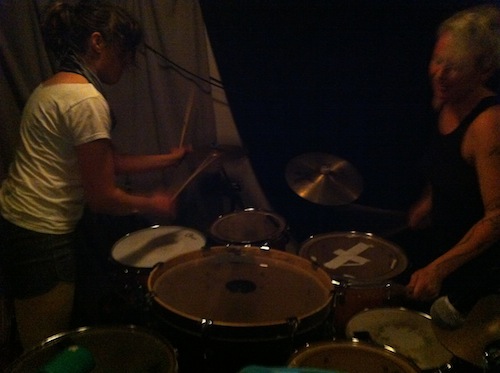
    Standing in a puddle of beer next to the drum kit, I was transported back to some of the best parts of the previous century, conducted in basements throughout the Northwest. I loathed being young, but I loved the music.

    Lisa and STS:

    stls

  • The other night I went to a work event populated by writers and filmmakers, and inevitably found myself sitting next to the lone scientist. This is how it goes: for whatever reason of training, taste, or inclination, my social life is populated by people with vast intellectual prowess and limited social skills.

    On this particular evening the seating plan was a relief, because people in the arts are notoriously avaricious. They steal whatever scrap of narrative or credit they can get their hands on, without compunction or acknowledgment. I’ve learned through long tedious experience that it is not wise to tell my stories to another writer, unless I’ve already published the piece. Even then the level of competition is obscene: is it really worth fighting over the crumbs of recognition available for such achievements as “living in Olympia in the 1980’s” “living in Portland in the 1990’s” or “vilified feminist writer”? In a word: no. I grew up in poverty, with cancer. I became a mother in my teens, survived an onslaught of violence, fought my way to safety, and immigrated to a new country. I’m no longer available for a victimization sweepstakes: I won that contest a long time ago, and I have better things to think about now. I’ve taken my tiara to a new tea party.

    The scientist in question was the clinical and inquisitive sort who always manages to extract real information about my genetic disorder, multiple cancer diagnoses, and the underlying biological mysteries. Then he gestured to his own face and head, dappled by the flickering candlelight of the dinner party. “I like facial scars,” he said. “I have plenty of my own.”

    I looked closer at his skin as he explained that a predilection for skateboarding, motorcycles, and rock climbing had slashed and burned him so many times he lost count of the injuries.

    I sighed: he didn’t understand, though he was illustrating the point. It isn’t the scars themselves that matter, but instead, the stories the scars tell. The long thin line bisecting his forehead reminds him of some outrageous adrenaline high, an adventure gone awry but nevertheless something he chose, something he wanted.

    The scars on my face are a narrative of captivity, confinement, duress. When I look in the mirror I don’t mind that my face is fucked up, and I do not reflect on the negligence or skill of the surgeons. I do not feel shame, or repulsion, and I do not care what other people see or feel. No. When I look in the mirror I see proof that I have cancer, that I have always had cancer, that there are no answers and no solutions. I am sanguine, not satisfied.

    However: it is always good to talk to people who are not frightened by their own mortality.

  • Did you know that belief in magical bunnies is mandatory if one wishes to receive baskets of treats? Even if you are, perhaps, a cynical teenager or sarcastic university student? True fact. This is especially crucial in countries where baskets of treats do not routinely materialize during spring feasts.

    In other spring festival news, my very own magical mama is visiting to celebrate her 60th birthday. My mother kept me alive when I didn’t care enough to bother, and gave me the strength and anger to keep moving. I thank her with fervent sincerity for raising me with a wild and fierce love, then letting me go.

    There are people in this world who want attention, and then there are people who just do their jobs, every day, no matter how difficult or woeful. My mother is an everyday hero: she has never had sufficient recognition or reward but she still keeps giving, across an entire lifetime.

    I can never express the level of my gratitude and awe. I can only try to live up to her standards, and say, once again: thank you.